Chicken Feet Calories, Nutrition and Preparation Tips
Learn what affects chicken feet calories, how sauces and cooking methods change a serving, and practical tips for portions and food safety.

Chicken feet are a familiar favourite in Vietnam, prepared in many ways: Thai-style sauce, steamed with fish sauce, grilled with chilli or dressed with lemongrass and kumquat. If you enjoy them while managing your weight, the preparation and portion deserve as much attention as the ingredient itself.
YourFit explores their nutrition, possible drawbacks and ways to enjoy them as part of a varied diet.
1. Nutrition in chicken feet
1.1. How many calories are in 100 g?
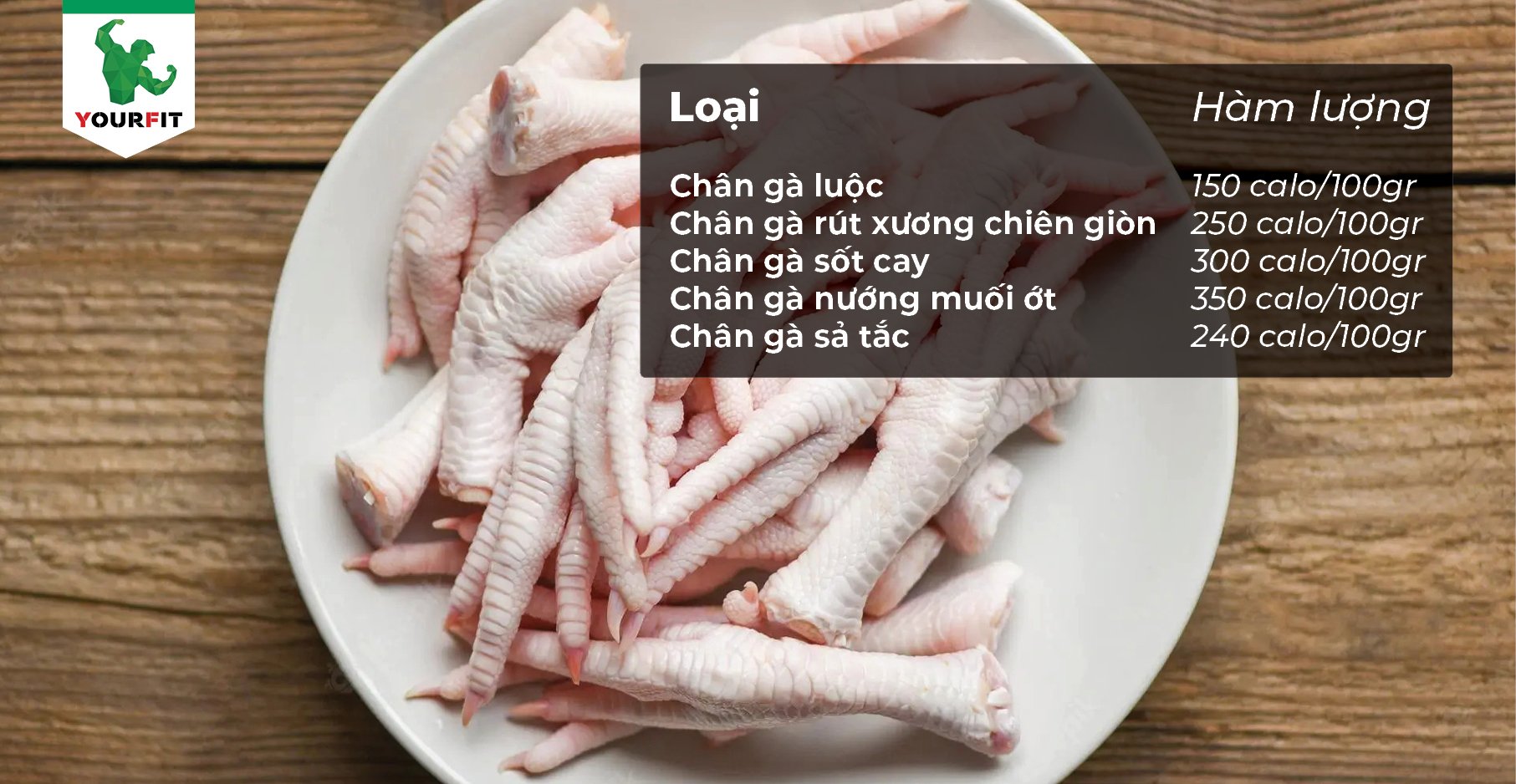
Calorie estimates need a clear serving basis: 100 g of edible cooked tissue is different from 100 g of whole feet with bones. Added oil, flour, sugar and sauce can change the total substantially, so there is no single number that describes every chicken-feet dish.
Boiled or steamed versions generally use less added oil than crispy fried versions. Spicy sauce, salt-and-chilli marinades and lemongrass-kumquat dressings can also add sugar or oil. Check a product label or the ingredients in a homemade recipe when estimating your serving.
1.2. What nutrients do they provide?
- Protein: much of the protein is collagen from skin and connective tissue.
- Fat: the edible tissue contains fat, and cooking oil adds more.
- Carbohydrate: plain chicken feet contain very little; coatings and sweet sauces change this.
- Vitamins: small amounts of vitamins, including A and B12, may contribute to the diet.
- Minerals: calcium, magnesium, phosphorus and zinc are present in varying amounts, with the edible portion and preparation affecting what you consume.
2. How chicken feet fit into nutrition
2.1. Protein as part of a varied diet
Collagen is a protein that the body digests into smaller components. Chicken feet can contribute protein, but variety remains useful: include other protein foods as well.
2.2. Blood glucose considerations
The plain ingredient has little carbohydrate, but a sweet marinade or sauce may add a significant amount. Consider the whole dish if you are monitoring carbohydrate intake.
2.3. Broth and digestive comfort
Simmering chicken feet creates a gelatin-rich broth. The amount of fat and seasoning affects how comfortable it feels to eat; broth should not be assumed to provide a large or fixed amount of calcium.
2.4. Heart-conscious choices
Choose modest portions and consider saturated fat and salty sauces. The fact that collagen occurs naturally in body tissues does not mean that eating it directly improves blood vessels.
2.5. Weight management
Protein contributes to a meal's nutritional value, but weight management depends on overall energy intake, activity and a sustainable routine. Chicken feet are best treated as one food within that pattern.

3. Is eating a lot of chicken feet a good idea?
Large portions can make it harder to balance the diet, especially when the dish is fried or served with rich sauces. Consider these practical issues:
- Fat and energy: skin, cooking oil and rich dressings contribute calories. Frequent large servings can increase overall intake.
- Food safety: buy from a reliable supplier, check freshness and storage instructions, and cook thoroughly. Poor handling can allow contamination.
- Small bones: chicken feet contain small bones that need careful removal. Eat slowly and do not swallow bone fragments.
- Digestive comfort: a large, fatty or spicy meal may worsen indigestion or reflux in sensitive people. Adjust the amount and seasoning to your tolerance.

4. Practical tips for enjoying chicken feet
4.1. Choose a trustworthy source
Select fresh products with clear provenance and appropriate refrigeration. Avoid items that look or smell spoiled.
4.2. Keep the portion moderate
Use a serving that fits the rest of your meal. There is no useful universal daily limit based on a large weight of whole chicken feet; bones, preparation and personal energy needs all differ.
4.3. Limit added oil
Boiling or steaming lets you enjoy the texture without the oil absorbed during frying. If grilling, avoid heavy coatings and charring.
4.4. Add vegetables
Vegetables bring fibre and freshness and help balance a rich dish. Choose different colours and textures instead of relying on chicken feet alone for the meal.

4.5. Choose a comfortable time to eat
If fatty or spicy food late at night affects your digestion, have it earlier or choose a smaller serving. A fixed cut-off such as 4 p.m. is not necessary for weight management.
5. Takeaway
Chicken feet can be enjoyed in moderation, with care around cooking, sauces and small bones. YourFit encourages you to consider the edible portion, add vegetables and keep a variety of protein foods in your diet.