Incline Bench Press: Benefits, Technique and Variations
Learn the incline bench press, including bench angle, step-by-step form, benefits, common mistakes and barbell, dumbbell and machine variations.
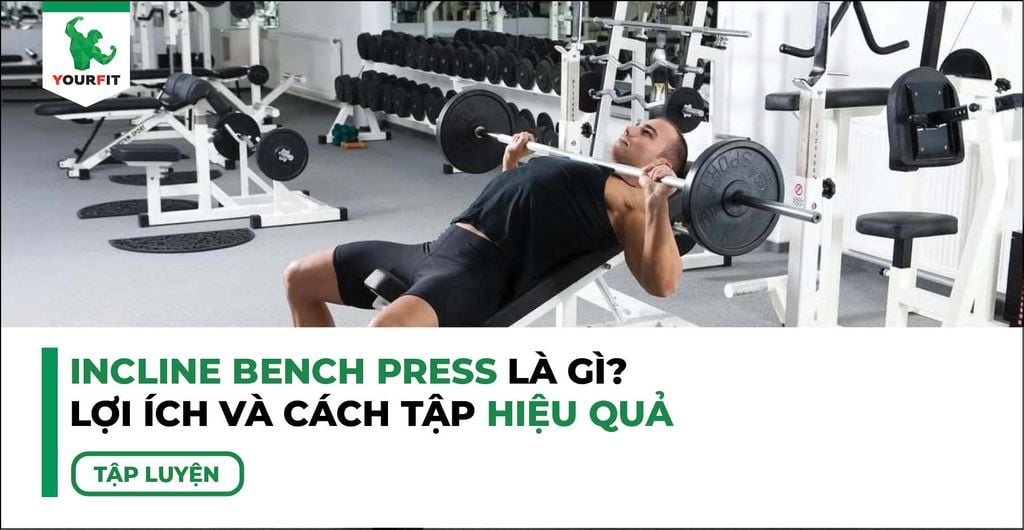
The incline bench press is a compound exercise for the upper chest, front shoulders and triceps. Changing the bench angle gives your pressing programme a different emphasis and can support balanced upper-body development.
This guide covers the movement, calorie expenditure, benefits, technique, variations and practical precautions.
1. What is an incline bench press?

Lie on an upward-sloping bench and press a barbell or two dumbbells from the upper chest to a position above it. A bench angle of approximately 30–45 degrees places more emphasis on the upper portion of the pectoralis major than a flat press, while the shoulders and triceps assist.
- Upper chest: Contributes to the pressing movement.
- Front shoulders: Assist the press and help control the upper arms.
- Triceps: Extend the elbows.
- Core: Helps maintain a stable torso.
- Muscles around the shoulder blades: Help control and support the movement.
The exercise can complement flat pressing, particularly when you want more upper-chest work. Its strength demands relate to pushing and raising the arms in sports such as basketball, volleyball and swimming. Beginners can learn with an appropriate light load, while experienced lifters can progress resistance. Barbell, dumbbell and Smith machine versions offer different stability demands.
2. How many calories does five minutes burn?

There is no fixed calorie total for five minutes of incline bench presses. Energy expenditure depends on your body weight, load, repetitions, tempo, rest and actual working time.
- Load: A heavier weight increases effort, but must remain controllable.
- Sets and repetitions: Four sets of 10–12 repetitions involve more work than three sets of eight at the same load.
- Pace: Faster repetitions are not automatically more productive. Prioritise consistent form.
- Rest: Shorter intervals can increase session density, while longer rests help preserve strength and technique.
- Individual fitness: Training experience and movement efficiency affect the effort involved.
- Technique: A repeatable movement makes your training easier to track and progress.
Use incline pressing for strength and muscle development. A broader programme may also include squats, deadlifts and cardiovascular activity such as running or skipping.
3. Benefits of the incline bench press
3.1. Upper-chest development
The inclined position gives the upper chest a different stimulus from flat pressing, supporting a fuller and more balanced chest within a progressive programme.
3.2. Pressing strength
Several muscles work together, making the exercise useful for upper-body strength. It can complement overhead presses, dips and push-ups, as well as everyday lifting and pushing tasks.
3.3. Posture and movement awareness
Strength training can be part of maintaining an active, comfortable upper body. Combine chest training with back work and regular movement; incline presses alone should not be expected to correct rounded shoulders or relieve neck pain.
3.4. Shoulder control
Controlling the weight trains coordination around the shoulder. A comfortable setup and suitable load matter more than assuming the exercise prevents injury.
3.5. A varied chest programme
Adding an incline movement changes the emphasis of a routine built mainly around flat presses. Balance the exercise selection with your goals, recovery and other upper-body training.
3.6. Sporting applications
Chest and shoulder strength contribute to sports involving pushing, throwing and raising the arms, including volleyball, basketball, boxing and swimming. Sport-specific skills still require their own practice.
3.7. Adaptability
Barbells, dumbbells and machines offer ways to adjust the exercise. Some beginners may use 10–20 kg in total, while experienced lifters may handle much more; these are examples, not targets. Choose a load that lets you complete every repetition under control.
4. Important precautions

- Control both directions: Avoid bouncing or using momentum.
- Choose an appropriate load: Learn the movement with a light weight before progressing.
- Set the bench deliberately: Approximately 30–45 degrees is a common starting range. A much steeper angle shifts more work toward the shoulders.
- Breathe steadily: Inhale during the lowering phase and exhale during the press.
- Manage elbow position: Around 45 degrees from the torso is a useful starting cue; avoid forcing the elbows far out to the sides.
- Keep the hips supported: Do not lift your hips to drive the weight upward.
- Finish smoothly: Extend the elbows comfortably without snapping them into a rigid lockout.
- Use a comfortable depth: Lower toward the upper chest without forcing the shoulders into an excessive stretch.
- Recover: Allow roughly 48–72 hours between demanding sessions for the same muscles, adjusted to your overall programme.
Stop if you experience shoulder, elbow or lower-back pain. A coach can help check technique; an injury history or persistent symptoms may require clinical advice.
5. Technique and variations

5.1. Prepare
Use a stable adjustable bench, suitable weights and a secure rack if pressing a barbell. Set appropriate safety supports or use a competent spotter. Leave room to handle the weights safely. Warm up for 5–10 minutes with shoulder circles, easy push-ups and light presses.
5.2. Step-by-step incline press
- Set the bench to approximately 30–45 degrees. Lie back with your head, shoulders and hips supported.
- Plant your feet firmly on the floor, roughly shoulder-width apart. Brace your core and maintain a comfortable, stable back position.
- For a barbell, begin with a grip slightly wider than shoulder-width—around 1.5 times shoulder-width may be a useful guide. Adjust so the wrists and forearms stay aligned. With dumbbells, choose a comfortable grip.
- Unrack the bar safely or bring the dumbbells above the chest.
- Inhale as you lower slowly toward the upper chest. Keep the elbows controlled and stop at an appropriate depth.
- Exhale as you press upward. Finish with the weights stable above the chest, pause briefly, then lower under control.
Try 3–4 sets of 8–12 repetitions, or 6–10 with a heavier load if experienced. Rest around 60–90 seconds or longer when needed. Shorter rests of 30–45 seconds make the session denser but are suitable only when technique remains consistent.
5.3. Variations
- Incline dumbbell press: Each arm controls its own weight, allowing a flexible hand position and movement path.
- Incline barbell press: A useful option for progressive pressing strength with a secure rack and appropriate support.
- Smith machine incline press: The guided bar path reduces some balance demands, but bench placement still needs care.
- Single-arm incline press: Trains one side at a time and challenges torso stability.
- Paused incline press: Pause for 1–2 seconds near the bottom without relaxing or bouncing.
- Resistance-band variation: Bands alter resistance through the movement. Use secure anchors and an appropriate setup.
- Low-incline press: A 15–30-degree angle provides a lower incline between flat and steeper pressing positions.
6. Build steady progress
Start with a comfortable bench angle, manageable load and consistent technique. The incline press works well alongside other chest movements; explore our dumbbell chest press guide and machine chest fly guide to compare options.