Machine Chest Fly: Benefits, Technique and Variations
Learn the pec deck machine chest fly, including setup, technique, common mistakes, variations and a comparison with other chest exercises.

The machine chest fly, often called the pec deck fly, offers a supported way to train the chest. This guide covers its benefits, energy expenditure, setup, technique, variations and place alongside other chest exercises.
1. What is a machine chest fly?
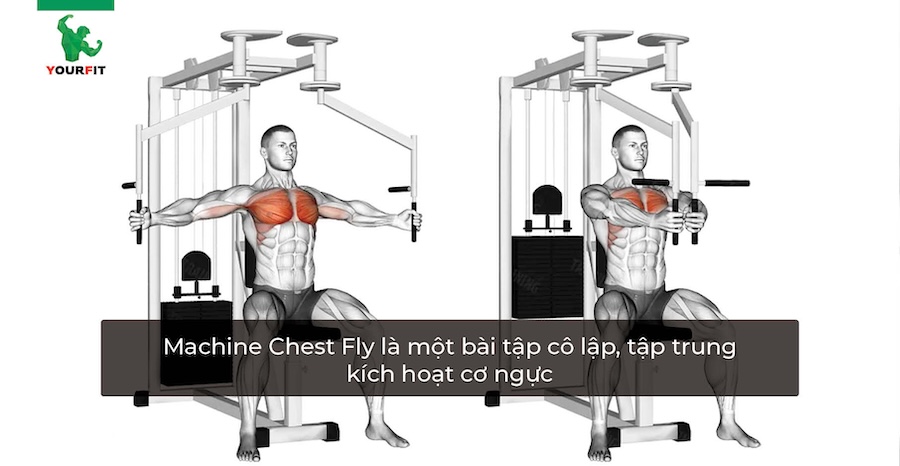
This isolation exercise uses a pec deck machine. Sitting with your back supported, you bring the handles or arm pads from your sides toward the front of your chest in an arc, then return them under control.
The pectoralis major is the principal working muscle. Muscles around the shoulder blades, including the serratus anterior, assist with control, while the trunk helps maintain the seated position. Compared with a press, the movement involves relatively little elbow extension.
The machine guides the path, reducing the balance demands of free weights. It can therefore be useful while learning chest training, although correct setup and an appropriate range remain essential.
2. Potential benefits
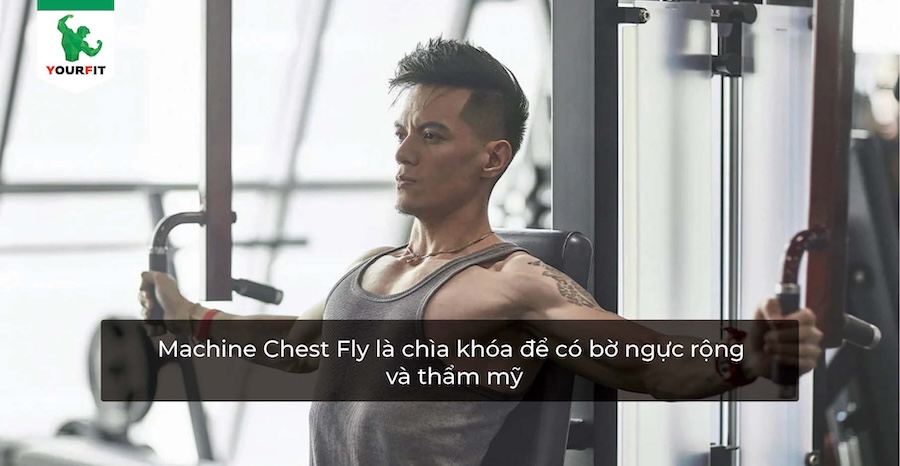
2.1. Chest development
The fly concentrates work on the chest and can contribute to a fuller, more balanced appearance when used consistently within a progressive programme.
2.2. A guided movement path
The machine handles much of the stabilisation required with dumbbells. This can make the movement easier to learn, but no exercise is risk-free or automatically suitable after an injury.
2.3. Useful pushing strength
Chest strength contributes to tasks such as pushing a heavy door and to many sporting movements. Machine flies can complement compound exercises such as the bench press.
2.4. Adjustable loading
A suitable seat position, starting angle and resistance help you find a comfortable movement. A machine does not guarantee lower shoulder stress; stop if the movement is painful.
2.5. Confidence and body awareness
Building strength can help you feel more confident and aware of your upper-body position. Combine chest work with balanced back training and regular movement rather than expecting one exercise to correct posture.
2.6. Focused work within a session
The supported setup makes it easier to concentrate on chest effort. It can fit near the end of a chest workout after compound presses, with the load adjusted for fatigue.
2.7. Controlled range of motion
Light, controlled repetitions provide practice through a comfortable range. A clinician may choose a modified version for rehabilitation, but it is not a self-treatment for shoulder or chest injury.
2.8. Simple progress tracking
Weight-stack settings make it easy to record resistance and repetitions. A machine might offer settings from 5–50 kg and increments such as 10 to 12.5 kg, although equipment varies. Progress only when the next setting preserves your technique.
3. How many calories does five minutes burn?
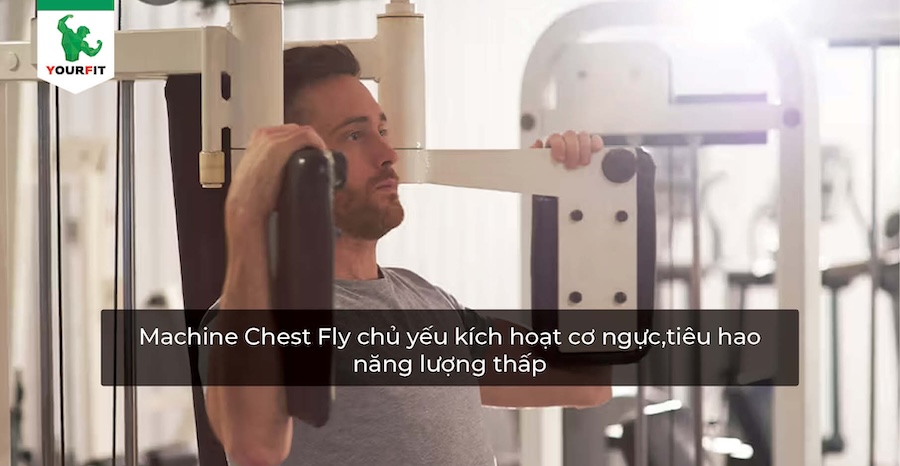
There is no dependable fixed calorie total for five minutes of pec deck work. Body weight, resistance, repetitions, tempo, work duration and rest all affect energy use. Training experience and movement efficiency also make a difference.
- Resistance: A heavier setting generally increases effort, but it is useful only if you can control it.
- Sets and repetitions: More total work increases the duration of muscle activity.
- Tempo: Smooth repetitions help maintain the intended movement; faster is not automatically better.
- Rest: Shorter rest can make a session more demanding, while longer rest may help maintain performance.
- Technique: Consistent form lets you compare your sessions meaningfully.
Use the chest fly primarily for strength and muscle development. For broader fitness, combine it with suitable compound movements such as squats and presses, plus cardiovascular activity such as running or skipping.
4. Important precautions

4.1. Put technique first
Use a smooth, controlled arc and feel the chest working as the handles come together. Avoid jerking the weight or swinging your body.
4.2. Adjust the machine
- Set the seat so the handles align approximately with your chest.
- Choose a starting position that does not force the shoulders into an excessive stretch.
- Keep your back supported against the pad.
4.3. Choose a suitable load
Start conservatively. Settings of 5–15 kg may be useful examples on some machines, but different pulley systems feel different. Reduce the resistance if the handles shake uncontrollably or you cannot maintain your position.
4.4. Breathe steadily
Inhale as the arms open and exhale as they come together. Avoid unnecessary breath-holding.
4.5. Avoid common mistakes
- Do not shrug or roll the shoulders forward to move the weight.
- Do not open farther than your shoulders can comfortably control.
- Keep your torso supported and head neutral instead of leaning forward.
- Bring the handles close without striking them together.
4.6. Allow recovery
Allow roughly 48–72 hours between demanding sessions for the same muscles. Two or three chest sessions a week may suit some programmes when balanced with other muscle groups and rest.
4.7. Pay attention to symptoms
Stop if you develop chest, shoulder or elbow pain. Ask a qualified coach to check your technique, and seek clinical advice if you have an injury history or persistent symptoms.
5. Technique, comparisons and variations
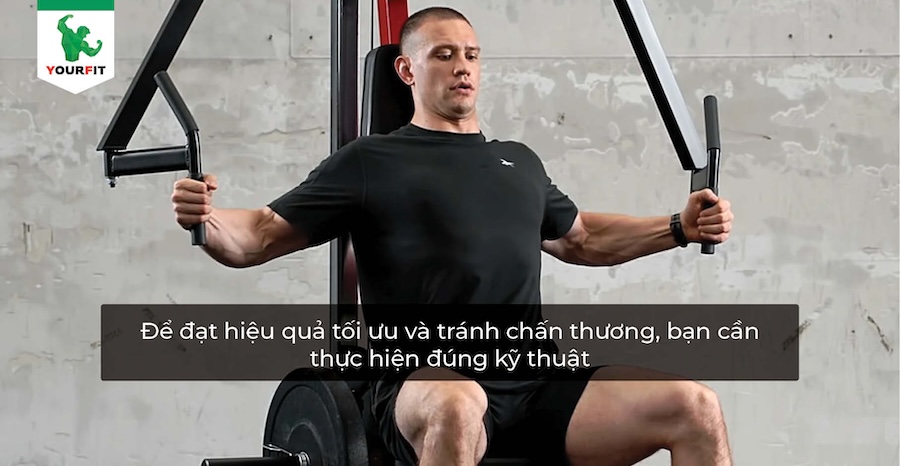
5.1. Prepare for the exercise
Check that the machine is stable and the adjustment pins are secure. Warm up for 5–10 minutes with shoulder circles, arm circles, easy push-ups or light cable work.
5.2. Step-by-step machine chest fly
- Sit upright with your back against the pad and feet firmly on the floor.
- Adjust the seat and handles. Depending on the machine, grip the handles or place your forearms against the pads.
- Brace your core gently, keep your head neutral and avoid shrugging.
- Inhale as you allow the arms to open under control, stopping at a comfortable chest stretch.
- Exhale as you bring the handles together in an arc. Keep a small, consistent bend in the elbows.
- Take roughly 2–3 seconds to open and 2 seconds to close.
A possible structure is 3–4 sets of 10–15 repetitions, or 8–12 repetitions with a greater load for experienced lifters. Rest 30–60 seconds or longer as needed to preserve form.
5.3. Technique reminders
Keep the back supported, shoulders comfortable and movement controlled. Stop the opening phase before the shoulders feel strained. Focus on moving the upper arms together rather than pulling with a shrug or a forward lean.
5.4. How it compares with other chest exercises
| Feature | Machine chest fly | Dumbbell chest fly | Incline bench press | Push-up |
|---|---|---|---|---|
| Exercise type | Isolation | Isolation | Compound | Compound |
| Main emphasis | Chest | Chest | Upper chest, shoulders, triceps | Chest, shoulders, triceps, core |
| Control demands | Guided movement | Independent dumbbells | Pressing technique and stable setup | Whole-body alignment |
| Movement path | Guided by machine | Adjustable to the lifter | Pressing arc | Body moves toward and away from floor |
| Safety considerations | Seat, start angle and load | Load and shoulder range | Suitable safeties or spotter for barbell work | Appropriate variation and technique |
| Who can use it? | Many levels with correct setup | Lifters with adequate control | Many levels with appropriate coaching and load | Many levels with suitable modifications |
| Equipment | Pec deck | Dumbbells and bench | Barbell and incline bench | Usually none |
Choose the machine fly when you want focused chest work with less balance demand. Dumbbells offer more freedom of movement but require greater control. Incline presses train several muscle groups together, while push-ups are a convenient bodyweight option. A balanced programme can use more than one of these.
5.5. Variations
- Single-arm machine fly: Work one side at a time, if the equipment permits, to observe and improve control without rotating the torso.
- Reverse machine fly: Face the machine and open the arms backward to train the rear shoulders and upper back. This is a different exercise, not a chest variation.
- High-to-low or low-to-high fly: Change the movement angle only on equipment designed to allow it; adjustable cables are often more suitable than a fixed pec deck.
- Paused fly: Pause for 1–2 seconds near the closed position without relaxing into the handles.
- Push-up superset: An example is 12 machine fly repetitions followed by 10 suitable push-ups. Adjust both the load and repetitions to your ability.
6. Add it to your programme thoughtfully
The machine chest fly can be a practical addition to chest training. Learn the adjustments, choose a comfortable range and track steady progress. Share your questions with YourFit if you would like help choosing exercises that fit your goals.