Dumbbell Chest Press: Benefits, Technique and Variations
Build chest strength with the dumbbell chest press. Learn flat, incline and decline variations, step-by-step technique and common mistakes to avoid.
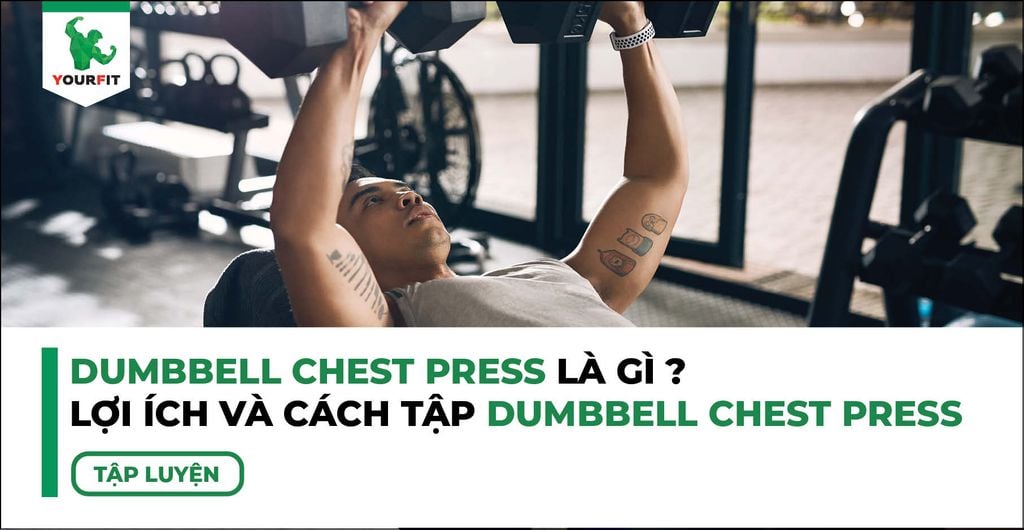
The dumbbell chest press trains the pectoral muscles, particularly the pectoralis major, while also involving the front shoulders and triceps. Because each weight moves independently, the exercise challenges stability and helps you notice differences between the left and right sides.
Dumbbells also allow you to adjust your hand position and range of motion. This guide explains the movement, its benefits, common variations and mistakes to avoid.
1. What is a dumbbell chest press?

The dumbbell chest press is a strength exercise in which you press two dumbbells away from your chest while lying on a bench. It primarily trains the chest, with assistance from the triceps and front shoulders.
The pushing pattern is relevant to sporting activities such as boxing, swimming and throwing, as well as everyday strength. Both beginners and experienced lifters can use an appropriately scaled version.
The principal variations are the flat dumbbell chest press, incline dumbbell chest press and decline dumbbell chest press. The bench angle changes the direction of the press and its muscular emphasis.
2. Benefits of the dumbbell chest press
2.1. Targeted muscle training
Pressing the dumbbells trains the chest while the triceps and shoulders assist. A suitable range of motion lets you load the chest through both the lowering and pressing phases.
2.2. More balanced effort
Each arm controls its own weight. This makes differences in strength or coordination easier to notice than when both hands share a barbell. Working at a load that both sides can control supports more balanced development.
2.3. An adjustable range of motion
Without a bar crossing the chest, dumbbells can move through a different range. Use only the depth your shoulders can comfortably control; a deeper stretch is not a goal in itself.
2.4. Stability and coordination
The muscles around the shoulders work to keep each weight steady. This develops control alongside pressing strength. If you have a history of shoulder injury, the exercise and its range should be assessed individually rather than assumed to be rehabilitative.
3. How to perform the main variations

3.1. Learn the basic setup
- Choose two dumbbells you can control. Sit on a flat bench with a weight supported on each thigh.
- Lie back carefully, using your thighs to help guide the dumbbells into position beside your chest.
- Start with elbows bent approximately 75–90 degrees and a comfortable hand position. A neutral grip, with palms facing inward, is one comfortable option.
- Plant your feet firmly, support your shoulders and hips on the bench and brace your core. Avoid lifting your hips or excessively arching your lower back.
- Press the dumbbells upward smoothly, bringing them close together without clashing them. Exhale during the press.
- Lower them slowly beside your chest as you inhale, maintaining control and muscular tension.
Try 3–4 sets of 10–12 repetitions, adjusted to your fitness and experience.
3.2. Flat dumbbell chest press
Lie on a flat bench with the weights beside your chest and the elbows bent. Keep your feet, hips and shoulders stable. Exhale as you press upward through the chest and triceps, extending the arms without forcefully locking the elbows.
Bring the weights close at the top without touching, then lower them in a smooth arc toward the sides of the chest. Keep the forearms aligned under the dumbbells and stop within a comfortable shoulder range. A slight inverted-V path can help keep the weights aligned, but do not force the elbows below the bench.
Perform 10–12 repetitions for 3–4 sets if suitable for you. Use a brief controlled pause of around 2–3 seconds where appropriate, maintain an even rhythm and avoid rushing to the point that breathing or form deteriorates.
3.3. Incline dumbbell chest press
- Set an adjustable bench to approximately 30–40 degrees. Lie back with the dumbbells around upper-chest level and elbows bent.
- Keep your feet planted and your hips, back and shoulders supported.
- Exhale as you press the weights upward, using the upper chest and triceps. Bring them close together without striking them.
- Inhale and lower slowly to the starting position. Keep tension through the upper chest and control the descent.
- Repeat for 10–12 repetitions and 3–4 sets, if appropriate, with a steady rhythm and brief pauses rather than rushed repetitions.
3.4. Decline dumbbell chest press
- Use a decline bench set to approximately 15–30 degrees, with the bench's leg supports securely positioned. Arrange the dumbbells safely before lying back.
- Bring the weights beside the lower chest, with the forearms close to vertical and the elbows comfortably angled.
- Keep your torso supported. Exhale as you press the weights upward on the line of the lower chest, bringing them close together without contact.
- Inhale as you lower back toward the lower chest. Keep the elbows controlled and avoid excessive tension or a forced stretch.
- Try 3–4 sets of 10–12 repetitions with a steady tempo and brief 2–3-second pauses as needed.
Use a stable setup and assistance where necessary to get into and out of a decline position safely.
4. Common mistakes and how to correct them

4.1. Uneven pressing
A dominant arm may push faster or higher than the other, causing the weights to move out of alignment. Slow down, choose a lighter weight and aim to move both arms at the same time and to the same height. A coach or safely positioned mirror can help you check alignment. A suitable single-arm press may also help develop control on each side.
4.2. Excessive back arching
Lifting your hips or greatly arching your lower back to move a heavy weight reduces stability. Keep your feet planted, maintain supported contact with the bench and brace your abdomen. If you need an exaggerated arch to complete a repetition, reduce the load.
4.3. Dropping the weights on the descent
Focusing only on the upward press and letting the dumbbells fall sacrifices control of the lowering phase. Control both directions. Try a tempo of 2 seconds down, a 1-second pause and 2 seconds up, using a weight you can manage throughout.
4.4. Using an unsuitable range
Lowering beyond your shoulder mobility can create discomfort, while consistently cutting the movement unnecessarily short changes the training stimulus. Keep the forearms roughly vertical, lower toward the middle or lower chest according to the variation, and stop before the elbows travel into an uncomfortable position.
4.5. Forcefully locking the elbows
Avoid snapping the elbows straight or resting passively on the joints at the top. Finish the press under control, with the arms extended comfortably and the chest still engaged. The goal is a stable, repeatable movement rather than forcing a rigid lockout.
5. Putting it into practice
Understanding the setup, bench angle and movement path makes it easier to choose a dumbbell chest press variation that suits your goals. Start with a manageable load, practise both the press and the descent, and progress only while your technique remains consistent.