Machine Chest Press: Benefits, Technique and Comparisons
Learn machine chest press setup, form and variations, and compare it with dumbbell presses, barbell bench presses and push-ups.
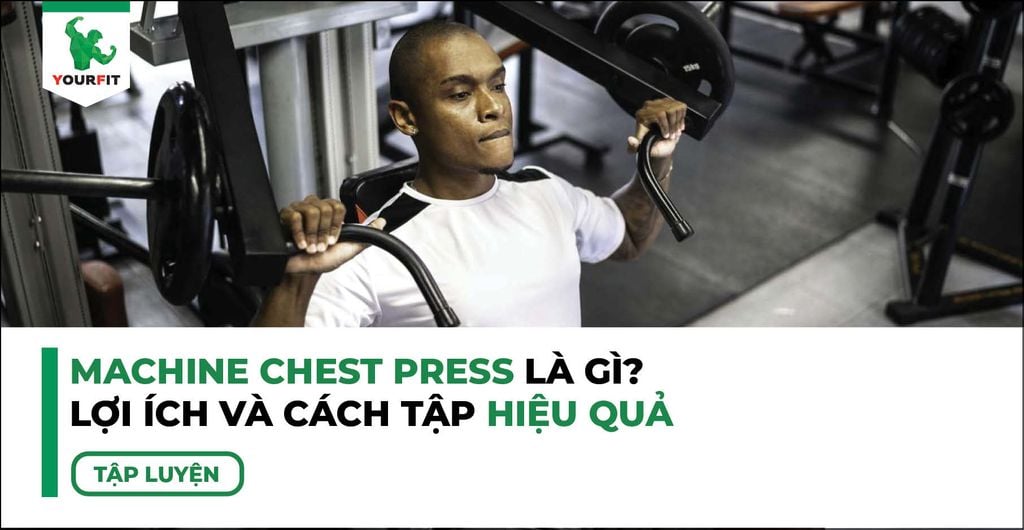
The machine chest press is a compound exercise for the chest, front shoulders and triceps. Its guided movement path and supported seat reduce the balance demands of free-weight pressing, making it a useful option for many beginners and experienced lifters.
This guide explains the exercise, practical precautions, benefits, energy expenditure, technique and how it compares with other chest exercises.
1. What is a machine chest press?

You sit with your back supported, press the handles forward and return them under control. The machine guides the movement, allowing you to concentrate on pressing rather than balancing separate weights. A suitable setup is still essential; a fixed path does not guarantee comfort or prevent technique errors.
- Pectoralis major: the main chest muscle involved in pressing the handles forward.
- Anterior deltoids: assist the pressing action.
- Triceps: extend the elbows.
- Core: helps maintain a stable seated position, generally with less balance demand than free-weight work.
The movement can build useful pushing capacity for daily tasks and sports. It is one way to train the chest effectively, alongside free-weight and bodyweight options.
2. Important precautions

2.1. Prioritize controlled technique
Start light and press smoothly. Avoid jerking the handles or using your whole body to move the load.
2.2. Adjust the machine
- Set the seat so the handles are around chest height.
- Choose a starting position with the elbows comfortably bent, around 90 degrees, without forcing the shoulders into a deep stretch.
- Keep your back supported by the backrest.
2.3. Choose an appropriate resistance
Some beginners may start around 5–15 kg on a weight stack, but machines differ substantially. Choose the setting that lets you move steadily, and reduce it if the handles shake or your posture changes.
2.4. Breathe with the movement
Inhale on the return toward the chest and exhale as you press forward. Maintain a steady rhythm.
2.5. Avoid common mistakes
- Keep the chest involved without letting the shoulders roll forward.
- Finish with controlled elbow extension rather than forcefully locking the joints.
- Keep the back supported and head neutral instead of leaning or craning forward.
- Control both the press and return rather than moving the handles quickly.
2.6. Plan recovery
A schedule of 2–3 sessions per week with approximately 48–72 hours between demanding chest sessions may work well. Adjust for your overall training and recovery.
2.7. Listen to symptoms
Stop for chest, shoulder or elbow pain. Seek individual advice if you have a relevant injury history, and ask a coach to check the setup when needed.
3. Benefits of the machine chest press

3.1. Develop the chest
Progressive machine pressing can increase chest strength and muscle, contributing to balanced upper-body development.
3.2. Build upper-body muscular endurance
The chest, shoulders and triceps work together through repeated presses. That capacity can help with daily pushing tasks and demanding upper-body activity.
3.3. Complement sport training
Pressing strength is one component of sports involving pushing or throwing. Combine it with sport-specific practice rather than expecting a machine exercise alone to improve every skill.
3.4. Reduce the balance demands
The guided path lets you focus on producing force through the chest without controlling a barbell or two separate dumbbells.
3.5. Practise consistent work on both sides
Pay attention to equal effort from both arms. Machines with independent arms can also help reveal differences between sides; a symmetrical machine does not automatically eliminate imbalance.
3.6. Develop controlled shoulder and chest function
A stable seated position can help you learn a repeatable pressing pattern and manage the range you use.
3.7. Adjust the exercise to your goal
Changing the resistance, sets and repetitions lets you emphasize strength, muscle development or local endurance.
3.8. Support a consistent training habit
The accessible setup can help beginners gain confidence, while experienced lifters can use it as a reliable accessory in a varied programme.
4. Energy expenditure

The chest press uses energy, but a five-minute calorie total cannot be reliably predicted from the movement alone. Consider these factors:
- Resistance: More load increases muscular demand when the movement remains controlled.
- Volume: More repetitions or sets add work; for example, four or five sets of 12–15 repetitions involve more work than a shorter session at the same load.
- Tempo: Pace changes the session demand, but speed should not compromise technique.
- Rest: A 30-second rest creates a denser session than 60 seconds, although harder sets may require longer recovery.
- Individual factors: Body size, fitness and movement efficiency vary.
- Execution: Controlled movement keeps the intended muscles involved consistently.
For general fitness, combine strength training with lower-body movements and cardio rather than using the chest press as a standalone calorie-burning strategy.
5. Technique, variations and comparisons
5.1. Prepare
Use a securely installed chest press machine with an adjustable resistance. Weight stacks may offer settings such as 5–50 kg, but the appropriate load depends on the machine and your ability. Warm up for 5–10 minutes with comfortable shoulder movements, arm circles, easy push-ups or light pressing.
5.2. Perform the press
- Sit upright with your back supported and feet firmly on the floor.
- Adjust the seat so the handles sit near chest height. Use the grip intended for that machine.
- Brace the abdomen and keep the head neutral and shoulders comfortable.
- Inhale as you let the handles return toward the chest through a controlled, comfortable range.
- Exhale and press forward until the arms are nearly straight, without snapping the elbows into lockout.
- Use a deliberate tempo, such as 2–3 seconds on the return and about two seconds on the press.
Try 3–4 sets of 10–15 repetitions while learning, or 8–12 repetitions with a more challenging load once experienced. Rest 30–60 seconds for lighter work, or longer when needed to preserve technique.
5.3. Technique reminders
Keep the back against the pad, control the shoulder position, avoid forceful elbow lockout and maintain a steady pace. The shoulders and arms assist the chest; focus on coordinated pressing rather than trying to exclude them entirely.
5.4. Variations
- Single-arm press: On a machine designed for independent-arm use, press one side at a time without rotating your torso.
- Incline machine press: An upward pressing angle emphasizes the upper chest.
- Decline machine press: A downward pressing angle changes the emphasis toward the lower chest.
- Pause press: Pause for 1–2 seconds near the end of the press while maintaining control.
- Push-up superset: Experienced trainees may combine 12 machine presses with 10 push-ups, adjusting both exercises to avoid form breakdown.
5.5. How does it compare with other chest exercises?
| Feature | Machine chest press | Dumbbell chest press | Barbell bench press | Push-up |
|---|---|---|---|---|
| Exercise type | Compound | Compound | Compound | Compound |
| Main muscles | Chest, shoulders, triceps | Chest, shoulders, triceps | Chest, shoulders, triceps | Chest, shoulders, triceps and trunk |
| Technique demands | Usually straightforward after adjustment | Independent control of both weights | Requires learning bar path and setup | Varies with the chosen progression |
| Movement path | Guided by the machine | Freely adjustable within a controlled range | Shared bar and grip | Body moves relative to fixed hands |
| Safety considerations | Correct seat, range and load | Controlled handling and shoulder position | Suitable safeties or a competent spotter | Suitable difficulty and stable support |
| Who can use it? | Many beginners and experienced lifters | Anyone able to control the selected load | Beginners with instruction through advanced lifters | Many levels with suitable modifications |
| Equipment | Chest press machine | Dumbbells and bench | Barbell, bench and rack | No equipment for a floor version |
The machine is useful when you want less balance demand and a predictable setup. Dumbbells offer greater freedom of movement but require independent control; see the incline dumbbell press guide. A barbell allows progressive heavy pressing with appropriate technique and safeguards. Push-ups need little equipment and add a strong trunk-stability component.
Choose the option that suits your goals, comfort and equipment. Rehabilitation requires individual guidance rather than choosing a machine solely because it appears safer.
6. Conclusion
The machine chest press is a practical way to train chest and upper-body strength. Adjust the machine carefully, control each repetition and use it within a balanced programme. Share your questions and experience with YourFit.