Face Pull: Benefits, Technique and Variations
Learn how face pulls train the rear shoulders and upper back, with cable and band technique, useful variations and common mistakes to avoid.

Face pulls are a useful addition to shoulder and upper-back training. This guide explains the exercise, its benefits, energy expenditure, technique and variations.
1. What is a face pull?
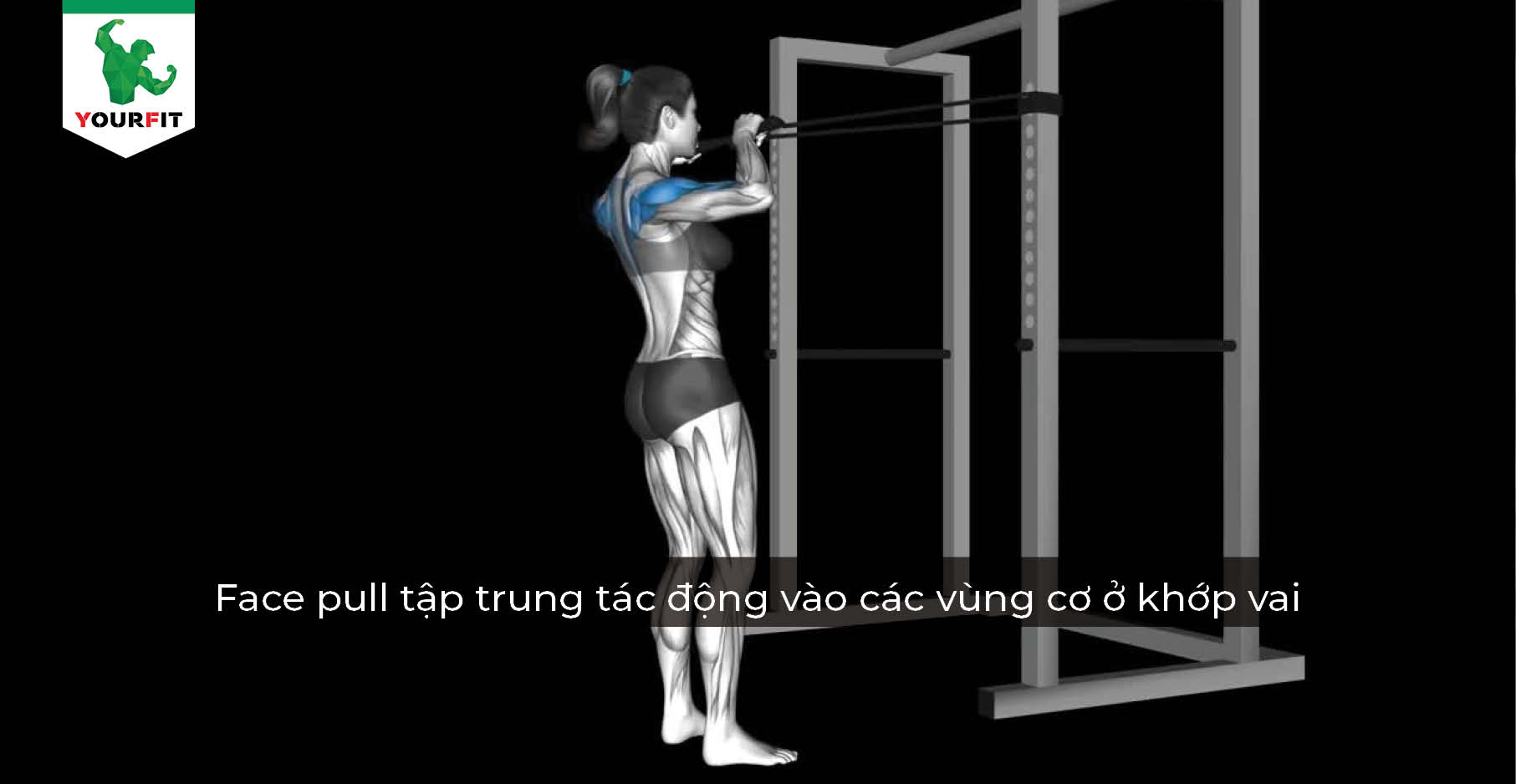
A face pull is an upper-body accessory exercise in which you pull a cable rope or resistance band toward your face. It emphasizes the rear deltoids, trapezius, rhomboids and shoulder external rotators.
These muscles help control the shoulder blades and upper arms. Training them can support shoulder function and postural awareness, particularly in a programme with plenty of pressing.
Face pulls complement movements such as bench presses and shoulder presses, which place more emphasis on the front of the upper body. Use a light to moderate resistance and prioritize precision over maximum load. The exercise is adaptable for both beginners and experienced lifters.
2. Benefits of face pulls

2.1. Support posture and shoulder comfort
Long hours at a screen can leave the shoulders feeling stiff and the upper body undertrained. Face pulls challenge the rear shoulders and muscles around the shoulder blades, encouraging controlled movement and an upright trunk. They can be part of a broader approach to comfortable posture, but persistent neck or shoulder pain needs individual assessment.
2.2. Train shoulder stability and mobility
The pulling and external-rotation components challenge control of the shoulder and shoulder blade. This can be useful preparation for sports involving repeated arm movements, such as swimming, tennis or baseball.
2.3. Strengthen the rear deltoids
The rear shoulders can receive less attention in programmes dominated by pressing. Face pulls provide a way to train them and the smaller supporting muscles. Balanced training supports shoulder capacity without guaranteeing injury prevention.
2.4. Encourage balanced muscle development
Although usually an accessory rather than a primary heavy lift, the face pull contributes to upper-back and rear-shoulder development without requiring large weights.
2.5. Adapt to your equipment and ability
A cable machine or resistance band provides the most familiar setup. Seated, single-arm and kneeling versions let you adjust the stability demands and focus of the movement.
3. How many calories do face pulls burn?

Face pulls usually involve less sustained cardiovascular demand than running or high-intensity intervals. There is no fixed calorie total for five minutes of this exercise. Body size, effort, training experience and the amount of rest all influence energy use.
- Resistance: More resistance increases the muscular demand, but the load must still allow controlled pulling and rotation.
- Technique and focus: Deliberate movement helps load the intended muscles. Do not use an assumed calorie benefit as a reason to abandon form.
- Tempo: Faster repetitions can make a set feel more demanding, but excessive speed reduces control of the rear shoulders.
- Sets and repetitions: Increasing from two sets to three or four, or using 15–20 repetitions instead of fewer repetitions, adds work. Adjust gradually to your recovery.
- Rest: Short rests of 15–30 seconds make a light session denser; rests of 60–90 seconds provide more recovery. Choose enough rest to maintain technique.
- Fitness and experience: People differ in movement efficiency and exercise tolerance, so energy expenditure cannot be inferred from the exercise name alone.
4. Face pull technique
4.1. Equipment
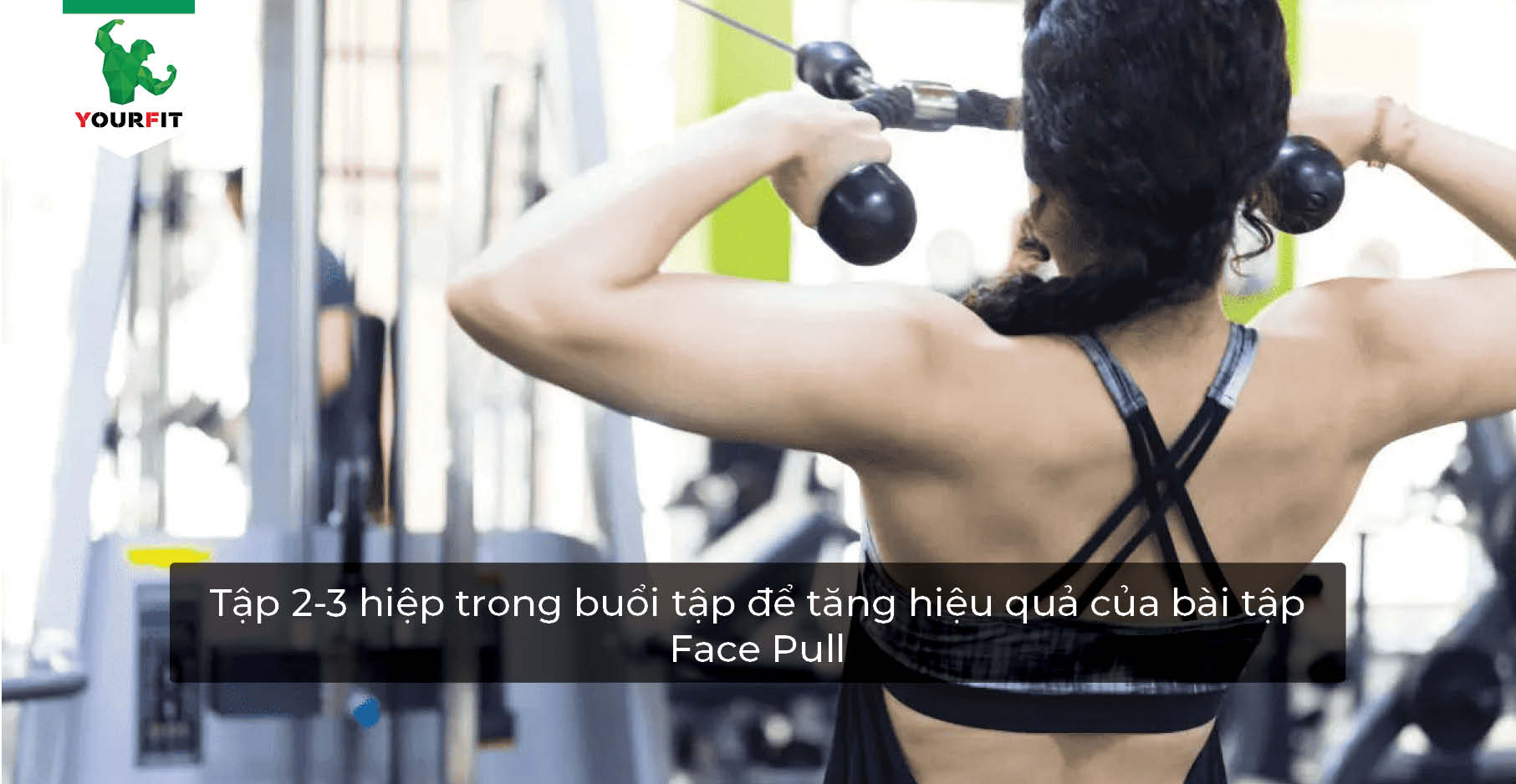
Use a cable machine with a rope attachment, or a resistance band with a secure anchor. Allow enough space to stand and move the arms freely.
4.2. Step-by-step instructions
- Set the pulley: Position it around face height or slightly above shoulder level and attach the rope. Stand with feet shoulder-width apart, a slight hip hinge and a neutral back.
- Take the grip: Hold the rope with palms facing each other and step back to create tension. Keep the chest comfortably lifted and the neck relaxed.
- Pull: Breathe steadily as you bring the rope toward your forehead or nose. Open the elbows to the sides and separate the rope ends, engaging the rear shoulders and upper back.
- Pause and return: Hold for 1–2 seconds, then slowly extend the arms without letting the weight pull you forward.
- Repeat: Aim for 2–3 sets of 12–15 repetitions using light to moderate resistance.
4.3. Variations
- Resistance-band face pull: Secure a band to a suitable fixed anchor around face height and use the same controlled pulling pattern. Check the anchor and band before each set.
- Seated face pull: Sit upright in front of the cable machine. Removing much of the lower-body contribution can make it easier to focus on the shoulders and upper back.
- Single-arm face pull: Use a single cable handle or band to train one side at a time. Keep the free hand relaxed or use it for balance without twisting the trunk.
- Incline-bench dumbbell variation: Lie chest-down on an inclined bench and use light dumbbells to perform a controlled high row toward the upper chest, with elbows moving out to the sides. This is related rear-shoulder work rather than an identical substitute for cable resistance. A 2–5 kg dumbbell is only an example; choose lighter if needed.
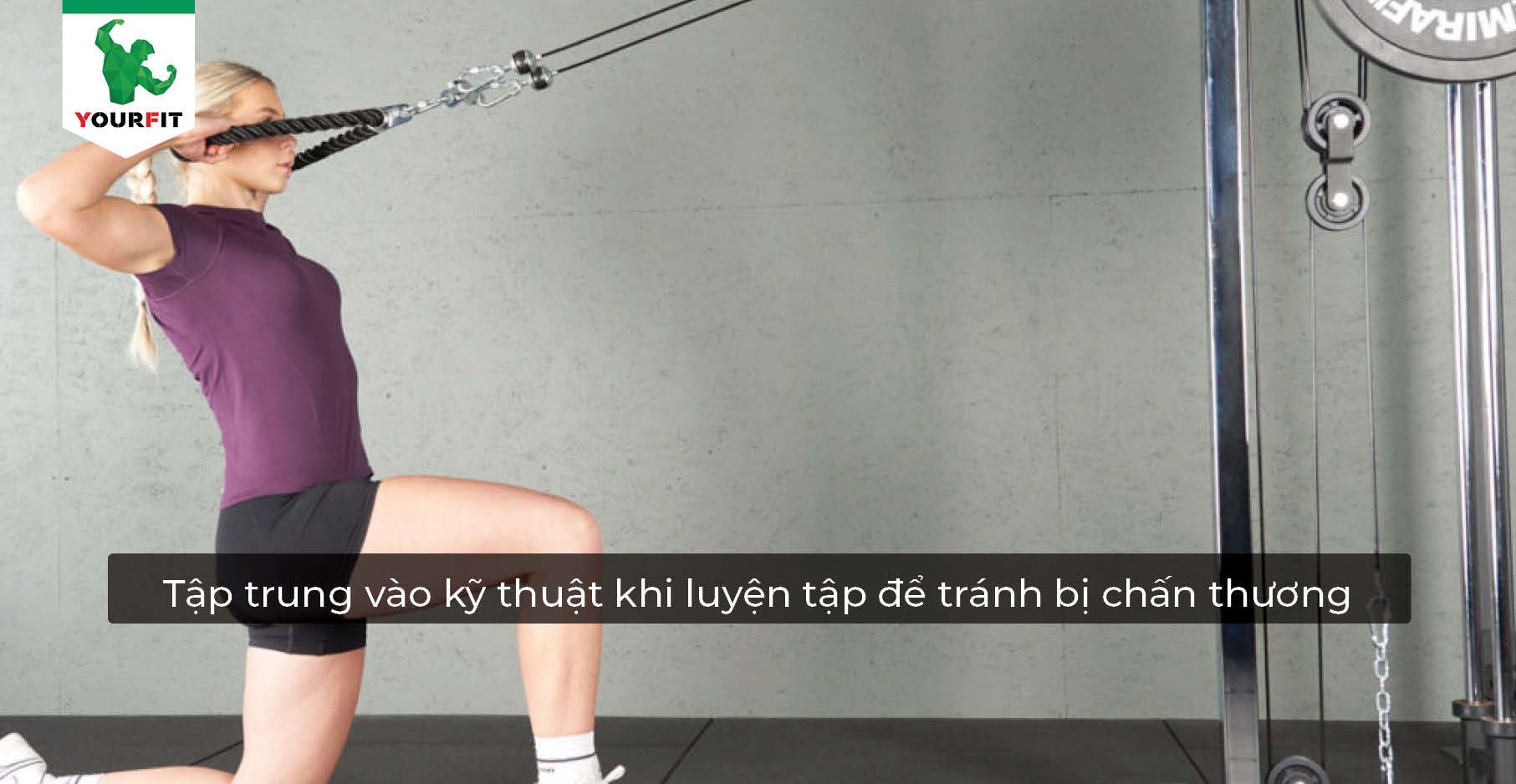
- Half-kneeling face pull: Place one knee on the floor and the other foot forward with that knee bent about 90 degrees. Pull while the abdomen and hips keep the trunk steady.
- Face pull with a press: A more complex variation adds a controlled pressing or reaching phase after the pull. Learn the intended movement path with a coach and light resistance before adding it to your programme.
5. Common technique mistakes
- Using momentum: Do not jerk the rope, round the shoulders or overarch the back. Keep the torso stable.
- Setting the cable at an unsuitable height: A very high or low pulley changes the movement and can make the intended shoulder rotation difficult. Start around face height and adjust comfortably.
- Using too much weight: If you cannot feel and control the rear-shoulder work, reduce resistance and review your form.
- Pulling toward the neck: Aim toward the face while allowing the hands to separate. Avoid excessive shrugging and neck tension.
- Rushing: Slow, repeatable movements make it easier to control the pull and return.
6. Conclusion
Face pulls can help round out your shoulder training by giving the rear deltoids and upper back dedicated attention. Choose a manageable resistance, maintain control and use the variation that fits your equipment and ability. Share your training experience with YourFit.