What Is HYROX? The 8 Stations and a Beginner's Training Guide
Understand the HYROX race format, station demands, competition divisions and a gradual approach to hybrid training in Ho Chi Minh City.

HYROX combines eight one-kilometre runs with eight workout stations, completed in a fixed sequence. You run, complete a station and return to the running course, repeating that pattern through the race. Preparing well requires both strength and endurance, as well as the ability to manage effort across different movements.
You might run ten kilometres comfortably yet struggle after pushing a loaded sled. Equally, being strong in the gym does not automatically make running between stations feel easy. That combination is what makes the event a distinct challenge.
Hybrid training is the broader approach of developing strength and endurance within one planned program. It can help you work towards HYROX, but you do not need to enter a race to train this way. This guide explains the competition, what each station demands and how to build an appropriate starting plan.
1. What is HYROX, and why does the format appeal to people?
HYROX is an indoor fitness race with a standardised sequence. Each one-kilometre run is followed by a workout station, and competitors must complete the required running and station work in order. Results provide a way to compare performance within the relevant division and track your own progress over time.
The format gives training a concrete target. Instead of focusing only on body weight or a heavier lift, you might aim to finish your first race, maintain a more consistent running pace or improve the station you find most difficult. Individual, doubles and relay formats also offer different ways to participate.
The energetic race footage is only part of the experience. Completing the event still requires preparation, appropriate movement skills and a realistic choice of division. Being able to start building towards HYROX is different from already being ready to race.
2. The eight HYROX stations
In the standard Singles format, the sequence is as follows. A one-kilometre run comes before every station, including the first.
| Order | Station | Required distance or repetitions |
|---|---|---|
| 1 | SkiErg | 1,000 metres |
| 2 | Sled push | 50 metres |
| 3 | Sled pull | 50 metres |
| 4 | Burpee broad jumps | 80 metres |
| 5 | Rowing | 1,000 metres |
| 6 | Farmers carry | 200 metres |
| 7 | Sandbag lunges | 100 metres |
| 8 | Wall balls | 100 repetitions |
You do not complete all the stations and then run eight kilometres. The alternating sequence is part of the challenge. Movement through the transition area, known as the Roxzone, also adds distance beyond the prescribed running segments.
Station 1: SkiErg
The SkiErg uses a coordinated pulling movement inspired by cross-country skiing. Efficient technique involves the arms, trunk and hips rather than relying entirely on the shoulders and arms.
Because it is the first station, it is tempting to chase an unusually fast machine time while you still feel fresh. Remember that seven runs and seven stations remain afterwards. Practise a rhythm you can control and repeat, rather than treating every thousand-metre effort as an isolated sprint.
Station 2: sled push
The sled push challenges your ability to apply force through the legs while keeping the body organised behind the sled. Technique, body angle and manageable steps matter alongside strength.
Surface friction can make the same nominal sled load feel different in two gyms. A training result on one surface should not be assumed to predict an identical race performance. Squats, split squats and progressively loaded sled practice can contribute to preparation, with loads chosen for your current ability.
Station 3: sled pull
Using a rope to pull the sled requires coordination of the arms, back, legs and trunk. Treating it solely as an arm exercise can make the station tiring quickly. Learn how to organise your position and pulling rhythm before increasing the demand.
Specific sled-pull practice and appropriate pulling exercises can help develop familiarity. Race rules also govern how you use the working area and rope, so technique practice should eventually include the relevant movement standards.
Station 4: burpee broad jumps
This station combines a burpee with forward jumping over the required distance. The difficulty comes from repeating a whole-body movement after the earlier work has already raised fatigue.
Trying to make every jump as long as possible may reduce the number of jumps but make your rhythm harder to sustain. Practise consistent movement and pacing. Before racing, check the current requirements for hand placement, the burpee and take-off and landing rather than relying on informal gym variations.
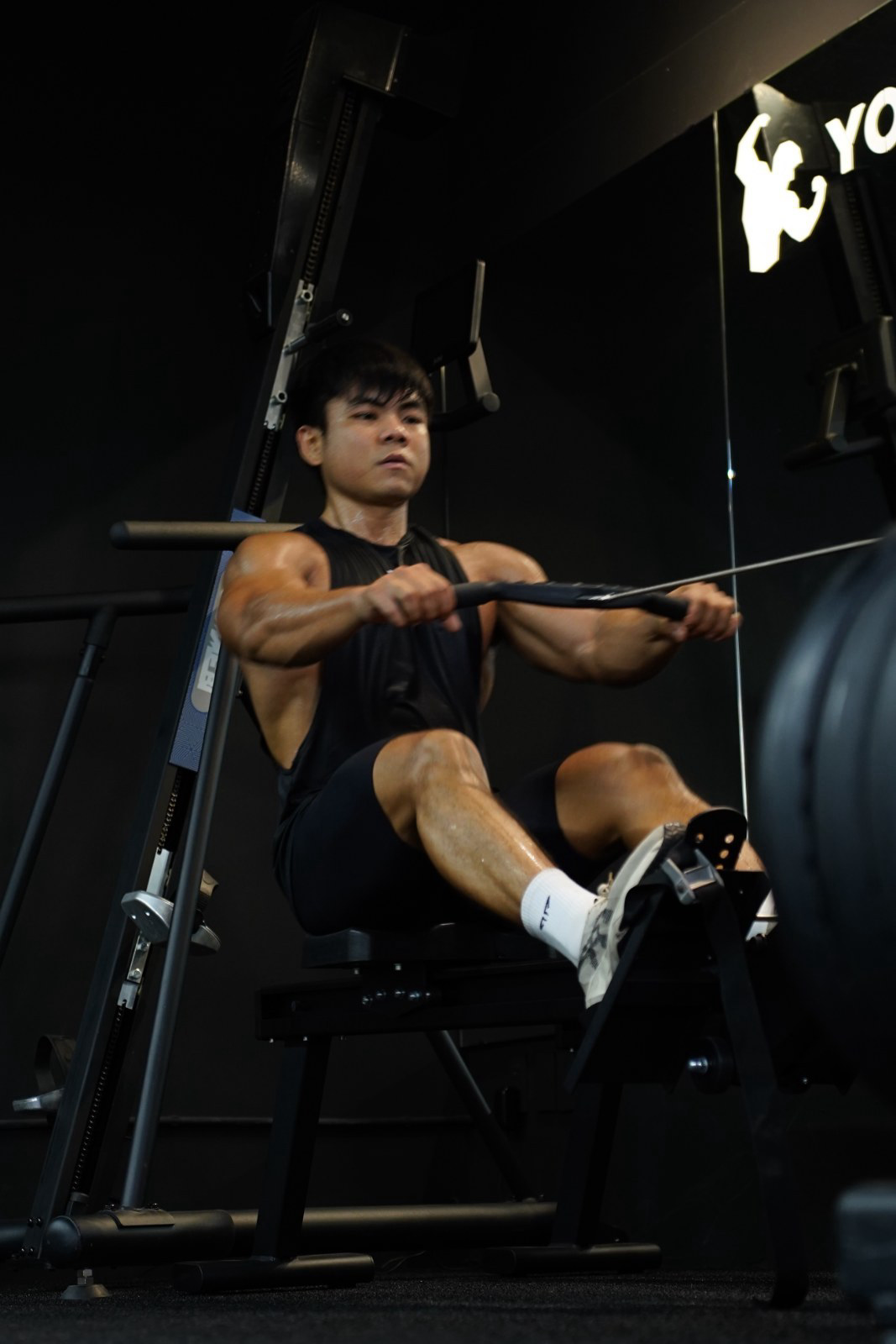
Station 5: rowing
Rowing combines the legs, hips, trunk and arms. Beginners sometimes pull with their arms too early and tire them before using the legs effectively. Technical practice should come before trying to force a fast thousand-metre time.
The next run still matters. A station time that looks impressive in isolation may not help the overall race if you cannot settle back into running. Preparation can include technique work, steady aerobic sessions and appropriately planned intervals.
Station 6: farmers carry
Walking with two kettlebells looks straightforward, but grip and posture can become demanding after several runs and stations. You need to keep moving while controlling the load, rather than simply demonstrate that you can lift it once.
Farmers carries, suitcase carries and other suitable grip work can be introduced with manageable distances and loads. Increase demands gradually while maintaining control and enough room to move safely.
Station 7: sandbag lunges
Walking lunges with a sandbag challenge the legs and balance late in the race. A movement that feels comfortable on its own may become less consistent after the preceding stations.
Build confidence through appropriate split-squat and lunge variations before adding more load or long continuous distances. Learn the competition standard as well: getting through a distance in training is not necessarily the same as completing valid race repetitions.
Station 8: wall balls
The final station combines a squat and a throw to a target. It requires repeated movement quality, coordination and a realistic strategy for dividing the work. What you can do fresh may differ considerably from your capacity after the runs and earlier stations.
Instead of forcing one long opening set and then needing an extended rest, practise repeatable set sizes with controlled pauses. Learn the squat and target requirements before practising them under fatigue.
Do all divisions use the same weights?
No. The following loads are listed for Singles in the 2026/2027 rulebook. Sled figures include the sled itself.
| Station | Women's Open | Men's Open / Women's Pro | Men's Pro |
|---|---|---|---|
| Sled push | 102 kg | 152 kg | 202 kg |
| Sled pull | 78 kg | 103 kg | 153 kg |
| Farmers carry | 2 × 16 kg | 2 × 24 kg | 2 × 32 kg |
| Sandbag lunges | 10 kg | 20 kg | 30 kg |
| Wall balls | 4 kg | 6 kg | 9 kg |
Doubles, Relay and Adaptive formats have their own rules. This overview does not replace the current official rulebook or event briefing. Confirm your division's loads, movement standards and transition procedures before entering and again before race day.
3. Open, Pro, Doubles and Relay: which format should you consider?
In Singles Open, one person completes all eight runs and stations using the Open requirements. Singles Pro keeps the overall sequence but increases certain loads. Choosing Pro should reflect suitable strength and preparation rather than simply wanting a harder label.
In Doubles, both partners complete the runs and share station work according to the rules. It is not simply half a race per person: both need the required running capacity. In Relay, a four-person team divides the running and station work under that format's rules.
Singles Open can be a first-race goal for someone with an appropriate foundation. Doubles or Relay may appeal if you want to participate with others. Select according to current ability, preparation time and the actual demands, not only the atmosphere you see in race videos.
4. How does hybrid training differ from HYROX and CrossFit?
Hybrid training combines strength and endurance development in a planned program. Someone with several years of lifting experience might add structured running to improve their ten-kilometre capacity while maintaining strength work. That is hybrid training even without race simulations.
HYROX is a specific competition. HYROX-focused preparation addresses its requirements: repeated running under fatigue, station technique, appropriate loading, pacing and transitions. Not every useful training session needs to resemble the event. Separate strength and easier aerobic work can be important parts of the preparation.
| Approach | Main emphasis | Typical focus |
|---|---|---|
| Bodybuilding | Muscle development and physique | Structured resistance work prioritising muscle growth |
| Strength training | Force production | Building capacity in selected movements and loads |
| Functional training | A defined movement need | Exercises selected for the intended activity |
| CrossFit | Broad physical capabilities | Varied workouts, skills and competition formats |
| Hybrid training | Strength and endurance | Planned development of both capacities |
| HYROX-focused training | Race preparation | Running, station skills and race-specific demands |
These approaches can overlap. A bodybuilder can run, CrossFit can include substantial endurance work and a hybrid athlete still needs purposeful strength sessions. The distinction is the priority and program organisation, not simply which exercises appear.
If maximum muscle growth is the main goal, a program with that emphasis may be more appropriate. If you want to become stronger and improve endurance together, a hybrid approach is worth exploring. A specific HYROX entry calls for more race-focused preparation within that framework.
5. Who can start hybrid training?
Experienced gym-goers may need more aerobic work and pacing practice. Runners may need to develop strength and familiarity with loaded movements such as carries, sleds and lunges. People playing tennis, pickleball or other sports can also work on general physical capacity, but their existing activity must count towards the weekly workload.
Someone already playing tennis three times a week should not automatically add several demanding conditioning sessions. The combination must account for fatigue, priorities and recovery. Likewise, you do not need a race entry to benefit from working towards stronger lifts and more comfortable sustained activity.
What if you are completely new?
You can begin with the foundations: learning to squat, hinge, push, pull and carry; becoming familiar with cardio equipment; sustaining manageable activity; and understanding effort. There is no need to start with eight kilometres of running or race-weight sled work.
Strength & Technique Training may be a useful starting point if movement skills need attention before more complex combined workouts. Existing injuries, unexplained symptoms or health concerns relevant to vigorous exercise should be discussed with an appropriate healthcare professional.
6. Can hybrid training help with fat loss, muscle and fitness?
It can support these goals, but no single outcome applies to everyone. Running, rowing and conditioning contribute to activity and energy expenditure, while fat loss also depends on nutrition, overall energy balance and consistency. A harder session is not automatically a better long-term strategy.
Muscle and strength development require appropriate resistance work, loading and progression. Adding endurance training does not automatically mean losing muscle. However, when maximising strength is the priority, the amount and timing of endurance work deserve attention. Research on concurrent training suggests that trained individuals can experience less lower-body strength development than with strength training alone in some arrangements, particularly when demanding endurance and strength work are combined closely in the same session.
That is a reason to plan carefully, not to avoid cardio altogether. Consider the goal, exercise selection and recovery rather than simply adding as much work as possible.
Progress can include a steadier running pace at a similar effort, better rowing or skiing performance, stronger lifts with consistent technique, more controlled carries or improved performance in a repeatable workout. Compare similar conditions rather than unrelated sessions with different loads and distances.

7. What should HYROX preparation prioritise?
Race videos can make preparation look like repeated all-out circuits. In practice, several capacities need attention.
An aerobic foundation supports sustained effort. Appropriate easy running, rowing or cycling can develop this without turning every day into a maximal session. Strength work helps build capacity for loaded stations, while muscular endurance addresses the challenge of repeating movements rather than lifting heavily once.
Technique also affects how you use your effort. Efficient SkiErg and rowing patterns can be easier to sustain than relying mainly on the arms. Pacing and transition practice introduce the experience of running after station work, with the difficulty increased gradually.
Recovery connects these elements. Your plan should leave enough capacity for the next session. Persistent fatigue, sleep disruption or declining performance are reasons to review the overall workload, not automatic proof of a particular diagnosis.
8. Example weekly structures
Frequency depends on your experience, schedule, other sports and recovery. These examples are for someone with a basic activity foundation discussing how to develop both strength and endurance; they are not minimum requirements for everyone.
| Weekly sessions | Possible distribution |
|---|---|
| Three | Two strength or strength-and-conditioning sessions, plus one aerobic session |
| Four | Two strength sessions, one easier aerobic session and one hybrid conditioning session |
| Five | Two strength sessions, two running/cardio sessions and one technical or hybrid session |
More days allow the work to be spread out, but do not guarantee better progress. Not every cardio session should be a hard interval workout.
For example, Monday could prioritise lower-body strength and technique, Tuesday an easy 25–40-minute run or a shorter appropriate alternative, Thursday full-body strength with pulling and carries, and Saturday a manageable combined session. Other days can allow for rest, walking or lighter activity.
Adjust this outline to your current capacity. Someone who already runs or plays sport should count those sessions instead of adding this entire schedule on top.
9. Preparing for your first HYROX race
An eight-to-twelve-week race-specific block may be something to discuss if you already have a solid strength and endurance foundation. It is not a universal readiness timeline. A complete beginner or someone who does not run regularly may need a longer foundation phase before that block makes sense.
Assess your starting point
Review your current running capacity, sustainable pace, squat and hinge control, lunge and carry experience, machine familiarity, manageable loads and available training time. Identify actual limitations rather than copying another athlete's schedule.
Develop strength and endurance deliberately
Give sessions clear purposes: lower-body strength, easier aerobic work, station technique or a moderate combined session. A full race simulation is unnecessary for every workout and may interfere with practising the foundations well.
Introduce running and stations together
Once the components are manageable, practise a run followed by station work and another run. The purpose is to learn pacing and maintain movement quality as fatigue rises. Avoid increasing distance, weight and number of rounds simultaneously without a clear reason.
Rehearse and reduce workload before the race
Closer to the event, appropriate partial or full simulations can help assess running pace, station times, repetition strategy and technique under fatigue. Plan recovery and a reduction in workload before racing rather than arriving exhausted from a final series of maximal workouts.
Example A: strength and carries
For someone who can already perform the exercises, an illustrative session could contain goblet squats for three sets of eight, Romanian deadlifts for three sets of eight, seated rows for three sets of ten and three carries of 20–30 metres. Choose controllable loads and enough rest to maintain the intended technique; fewer sets or simpler variations may be appropriate.
Example B: an introduction to combined work
A short sequence might pair a 400-metre easy run or suitable brisk walk, 250 metres of rowing, a 20-metre carry and eight to ten bodyweight squats. Two or three rounds are an illustration for someone ready for that workload, not a target every beginner must complete. Rest enough between rounds to continue with control.
Neither example is a standard HYROX race simulation or an individual prescription. Adjust exercise choice, load and duration to your ability and health circumstances.
10. Common mistakes when starting
Making every workout a maximal circuit can crowd out strength development, aerobic work and technical practice. The reverse imbalance matters too: strong running does not replace the loaded movement skills needed at the stations, and heavy lifting alone does not prepare you for repeated runs.
Starting too fast is another common planning error. A quick first kilometre or station is not valuable if it substantially slows everything that follows. Practise an effort you can sustain across the sequence.
Learn movement standards before trying to perform them quickly. Squat depth, valid repetitions and station procedures matter in competition. Also identify weaker areas rather than repeatedly choosing what you already enjoy. The goal is a balanced preparation plan, supported by food, sleep and enough recovery to repeat quality work.
Do not force the schedule through unusual pain, exhaustion or persistently poor recovery. Review the plan and seek appropriate help when needed.
11. What equipment do you need, and how should you choose a gym?
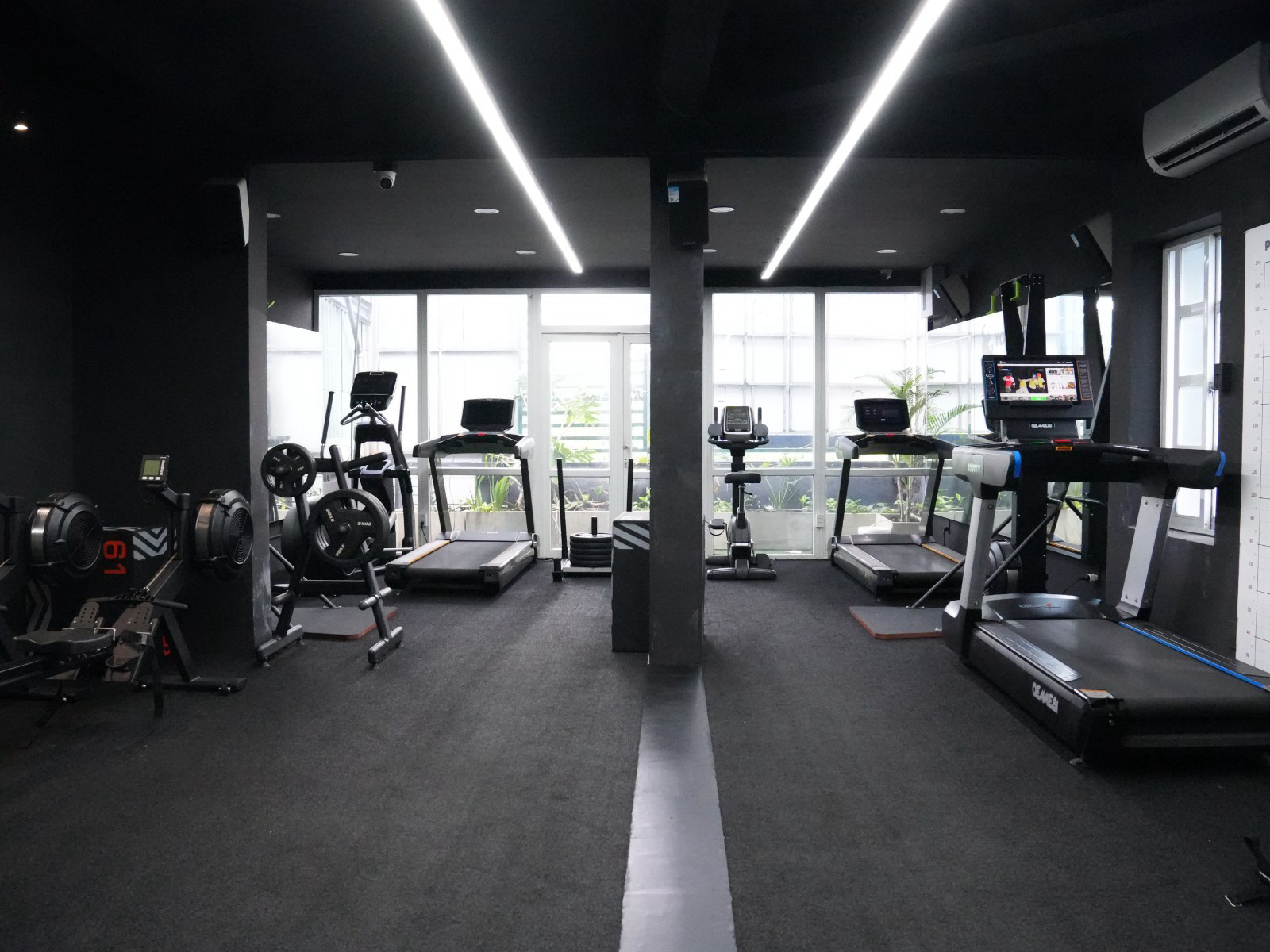
Specific station preparation involves access to a ski ergometer, rower, sled, kettlebells, sandbag, wall ball and suitable movement space. Foundation work does not require every race implement. Squats and split squats can develop leg strength, dumbbell carries can introduce loaded walking, and other cardio equipment can support aerobic work.
These alternatives develop related capacities without reproducing every race condition. A shorter sled lane or different floor surface may be useful for training while making direct time comparisons unreliable.
When looking for hybrid training in Ho Chi Minh City, check four things: whether the program starts at your level; whether coaching includes explanation and adjustment; whether the equipment serves your actual goal; and whether the schedule and full cost are sustainable. If racing is the objective, establish which skills you can practise at the venue and which need another arrangement.
12. Hybrid Performance at YourFit
Hybrid Performance at YourFit combines strength and endurance, drawing inspiration from hybrid racing while adjusting training to the individual's starting point and goals. The introduction should establish your experience, movement capacity and relevant limitations before increasing the challenge.
Work may progress from aerobic and movement foundations to strength, muscular endurance, combined cardio and loaded exercises, then pacing and performance reviews. Suitable short benchmarks can help track change without making every workout a test.
YourFit offers one-to-one private coaching, partner coaching and Hybrid groups of up to four. The small-group option provides direct guidance with adjustments to exercises and load. A typical session is around 60 minutes, including preparation, the main work and a review, with the structure matched to the participants.
Hybrid Training prices
| Hybrid package | Total fee | Average session price |
|---|---|---|
| 12 sessions over one month | VND 2,400,000 | VND 200,000 |
| 36 sessions over three months | VND 6,480,000 | VND 180,000 |
These published packages include corresponding Membership during their validity, subject to access conditions. Check the current Hybrid prices and terms before registering. Our comparison of Membership, Hybrid and PT can help you choose the level of support.
YourFit is at 103 Dien Bien Phu, Gia Dinh Ward, Ho Chi Minh City. You can explore the coaching team before arranging a visit. Hybrid Performance should not be interpreted as a claim that YourFit is an officially certified HYROX training facility. It is a program for developing strength, endurance and movement capacity around your goals.
Frequently asked questions
Can a complete beginner start working towards HYROX?
Yes, by first developing basic movement skills and manageable strength and cardio work. Beginning the preparation process does not mean immediately completing the full race format. Allow time to build a foundation.
Is HYROX suitable for women?
There are women's divisions with specified requirements. Readiness depends on individual fitness, experience, health and preparation, rather than gender alone.
Can I do hybrid training if I am not a confident runner?
You can begin with suitable walking, walk-run intervals, rowing or cycling. If standard HYROX competition is the goal, running capacity still needs to develop because running is part of the event.
Is Open easy compared with Pro?
Open uses lower loads at certain stations, but remains a substantial fitness challenge. Lower loads do not remove the need for preparation.
How many weekly sessions are enough?
There is no universal number. The weekly examples above are discussion points, and race preparation may require different priorities. Account for your starting point and other activities rather than copying a fixed schedule.
Is twelve weeks enough for a first race?
Not for everyone. Someone already strong and aerobically fit may use a focused preparation block, while a new trainee may need much longer. Decide based on the work you can perform and recover from, not the calendar alone.
Do I need a PT or specialist shoes?
Neither is automatically required. Experienced trainees may manage their own plan, while a coach can help with technique, workload and a first event. Footwear should suit running, loaded work and grip demands. Test it in relevant sessions rather than choosing solely because a model is popular.
Is hybrid training worthwhile without racing?
Yes. Your goals may simply be stronger lifts, more comfortable running or better general fitness. The program should serve those priorities; a race entry is optional.
Do YourFit Hybrid packages need a separate Membership purchase?
The listed Hybrid packages include corresponding Membership during the package period. Confirm the applicable access conditions when selecting your package.
Start with the foundation your goal requires
HYROX provides a clear challenge that brings strength and endurance together. Preparing for it involves more than hard circuits: aerobic capacity, strength, station skills, pacing and recovery all need a place in the plan.
You can also train for a balanced mix of strength and endurance without racing. If you want to explore that approach, learn about Hybrid Performance and arrange a YourFit trial. Discuss your goals and current experience so the starting point fits you.