Mountain Climbers: Benefits, Technique and Variations
Learn mountain climber technique, four useful variations and practical form checks for a workout that challenges your core, coordination and conditioning.

Mountain climbers combine a supported plank position with alternating leg movements. This guide explains the exercise, its benefits, popular variations and the technique details to keep in mind.
1. What are mountain climbers?

Mountain climbers are a dynamic bodyweight exercise that can raise the heart rate while challenging trunk stability, coordination and muscular endurance. The arms, shoulders and upper back support the body while the core and legs control the alternating knee drives.
This combination makes the movement useful in general conditioning and running-oriented workouts. It trains coordinated movement and trunk control relevant to many daily and sporting activities.
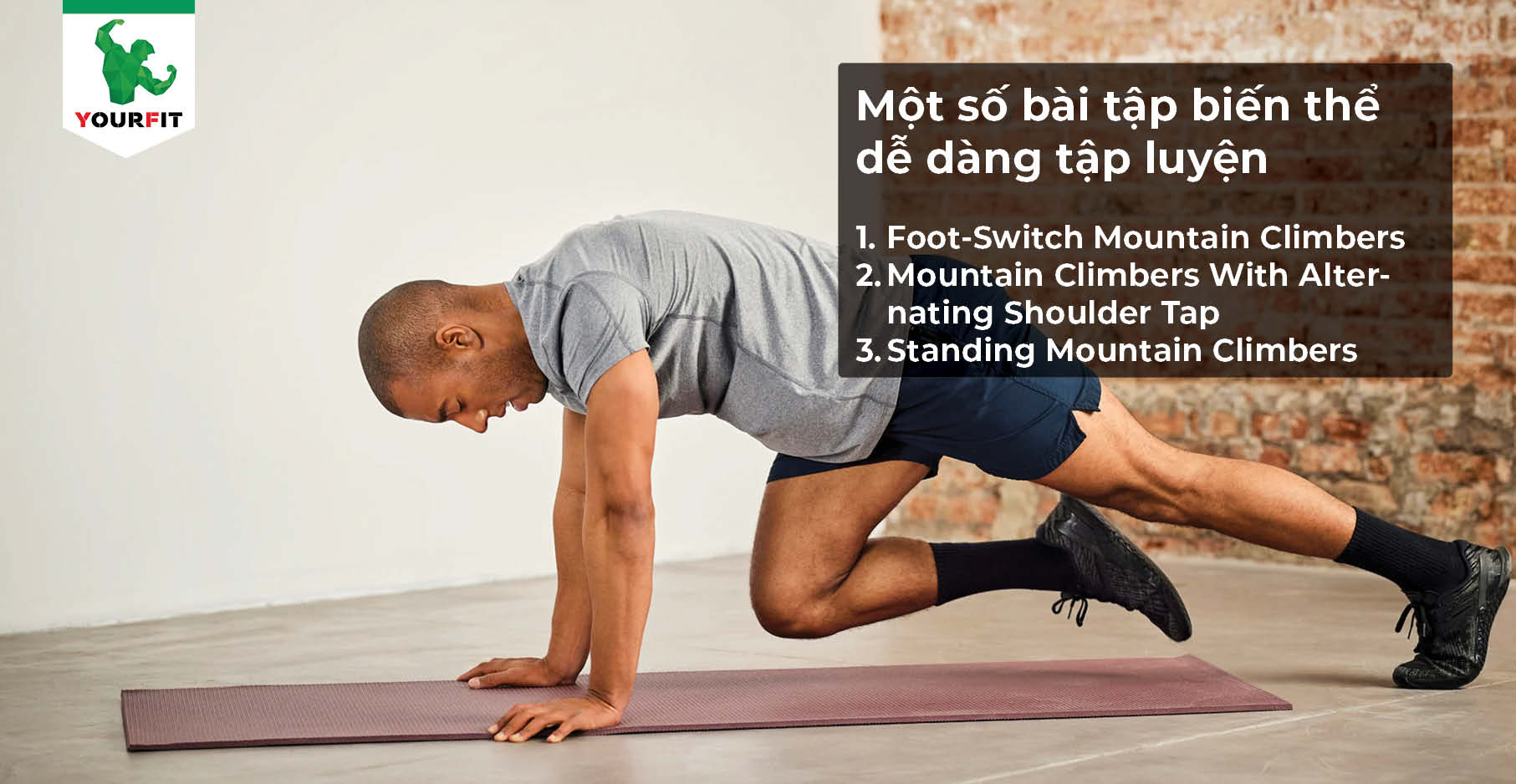
Variations include foot-switch mountain climbers, mountain climbers with alternating shoulder taps and standing mountain climbers.
2. Benefits of mountain climbers
2.1. Contribute to energy expenditure

A brisk, sustained set can be demanding because several muscle groups work together. Pace, duration and rest affect the energy used. Mountain climbers can contribute to an active weight-management routine, but body-fat changes depend on the overall pattern of nutrition and activity.
2.2. Challenge balance and coordination
Keeping the trunk stable while one leg moves challenges coordination between the supporting limbs and the core. This kind of movement practice can complement balance training and sport preparation.
2.3. Develop whole-body muscular endurance
The shoulders and arms support your weight while the abdomen and hips control the pelvis. This develops endurance and stability that can support other exercises. It should not be treated as a guaranteed remedy for back pain.

Adjusting speed and difficulty makes the movement useful at different fitness levels. Begin with control and build endurance gradually.
2.4. Add a cardiovascular challenge
Repeated knee drives can raise the heart rate and contribute to cardiovascular conditioning. Consistent, appropriately scaled training can make sustained activity feel easier over time.
3. Popular mountain climber variations
3.1. Basic mountain climber
- Set up: Begin in a high plank, with palms firmly planted, hands under the shoulders and fingers in a comfortable position. Extend the legs, brace the abdomen and keep the neck, back and hips aligned.
- Move: Draw the left knee toward the left side of the chest or hand, return it and repeat with the right leg. Alternate at a pace that lets the trunk stay stable.
- Reset: Return to the high plank. A brief 1–2-second pause can help you regain position before continuing.
- Repeat: Try a 20–30-second interval, then recover enough to repeat with good form. A simple practice option is 3–5 controlled knee drives per set for 3–4 sets before progressing to longer intervals.
3.2. Foot-switch mountain climber
- Set up: Take the same stable high-plank position with straight supporting arms, extended legs and a braced abdomen.
- Switch: Bring the right knee toward the chest, then switch legs so the left knee comes forward. Increase the rhythm only while the shoulders and hips remain controlled.
- Reset: Return the feet to the starting position and pause for 1–2 seconds when needed.
- Repeat: Use 20–30-second work intervals as your ability allows. For technique practice, begin with 3–5 controlled switches in each of 3–4 sets, allowing enough rest to keep the movement steady.
3.3. Mountain climber with alternating shoulder taps
- Set up: Begin in a high plank with a stable trunk.
- Combine the movements: Perform 2–3 knee drives per leg. Widen the feet for stability, then alternate hands to tap the opposite shoulder for about four taps. Avoid rotating the hips.
- Reset: Replace both hands securely, return to the plank and pause for 1–2 seconds if necessary.
- Repeat: Work for 20–30 seconds at a controlled pace. Build toward 3–4 sets; shorter blocks of 3–5 movements are a useful starting point when learning the sequence.
3.4. Standing mountain climber
- Set up: Stand upright with feet about shoulder-width apart and a comfortable, neutral neck and back.
- Move: Lift the right knee toward your chest to a comfortable height, lower it and repeat with the left leg.
- Reset: Return the foot to the floor under control, pausing briefly if needed to maintain balance.
- Repeat: Try 20–30 seconds of alternating knee lifts. Begin with 3–5 controlled repetitions per set for 3–4 sets if that is a more suitable challenge.
Brief 2–3-second pauses can help you reset within a set, but take longer recovery between demanding intervals when needed. Speed is optional; stable technique comes first.
4. Important technique tips

- Do not let the hips rise excessively: Fatigue often causes the hips to drift high. Keep the torso close to a straight plank and stop or reset when you can no longer hold it.
- Keep the upper body supported: Avoid collapsing into bent elbows or shrugging the shoulders toward the ears. Maintain firm hand contact and a stable shoulder position.
- Use deliberate knee drives: Move the knee purposefully instead of simply shuffling the feet. The aim is coordinated leg movement with a steady trunk, a useful skill for running and other active tasks.
- Breathe consistently: Do not hold your breath through the interval. Choose a pace that allows control of both movement and breathing.
- Respect your limits: Reduce speed, shorten the interval or choose the standing version when the floor version is too demanding.
5. Conclusion
Mountain climbers can add coordination, core endurance and cardiovascular work to your routine. Learn the basic position first, then choose the variation and pace that suit your current ability.