Dumbbell Front Raises: Muscles Worked, Technique and Variations
A practical guide to the dumbbell front raise: learn its role in shoulder training, controlled technique, useful variations and common mistakes.

The dumbbell front raise is an isolation exercise for the front of the shoulders. You lift a pair of dumbbells from in front of your thighs to approximately shoulder height while keeping the rest of your body steady. It is a straightforward movement, but choosing a manageable weight matters more than lifting as high or as heavily as possible.
Below, YourFit explains the muscles involved, energy expenditure, potential benefits, technique, variations and the mistakes that can make the exercise less useful.
1. What is a dumbbell front raise?
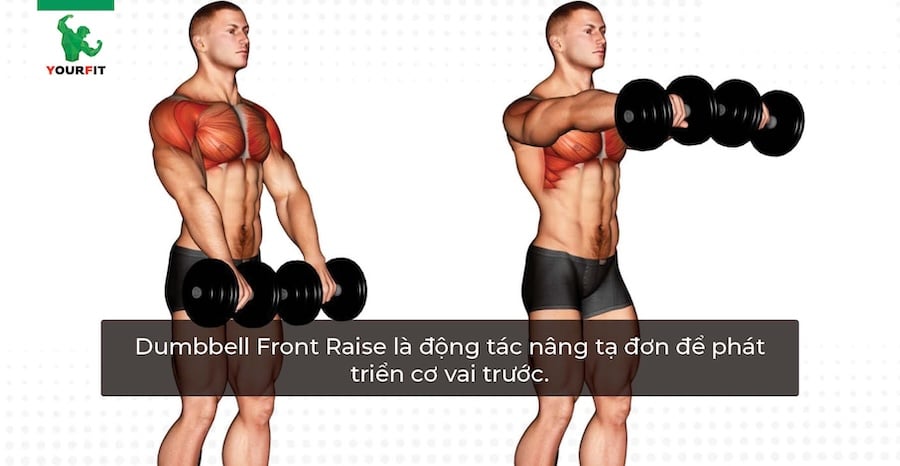
The main movement is shoulder flexion: raising the arm in front of the body. The anterior deltoid, or front part of the shoulder muscle, plays a central role. Other muscles around the shoulder and upper chest assist, while the trunk helps you stay upright rather than lean back.
Compared with a bench press or overhead press, the front raise provides more focused shoulder work with less movement at the elbow. It is usually an accessory exercise within a broader programme rather than the main lift of a session.
- Front deltoid: produces much of the arm-raising movement.
- Other shoulder and shoulder-blade muscles: help guide and support the arm as it moves.
- Upper chest: can assist shoulder flexion.
- Trunk muscles: resist leaning, swaying and excessive lower-back arching.
Front raises can be adapted with light dumbbells, a resistance band or a manageable household weight. However, pressing exercises already train the front shoulders. Someone who does substantial chest and overhead pressing may need little additional front-raise work. A balanced shoulder programme should also consider pulling movements and the side and rear shoulders.
2. How many calories do front raises burn in five minutes?
There is no dependable single calorie figure for five minutes of front raises. Body size, total repetitions, resistance, movement time and rest all affect energy use, and a short isolation exercise cannot be assigned a precise burn from the weight of the dumbbell alone.
The factors to consider are:
- Resistance: heavier weights change the effort, but only help if you can still perform the intended movement.
- Sets and repetitions: more work generally changes total energy expenditure, although it does not justify a precise calorie calculation.
- Tempo: controlled lifting and lowering keep the exercise focused; rushing to raise your heart rate can introduce swinging.
- Rest: enough recovery helps you repeat the movement accurately. Shorter rest is not automatically better.
- Training experience and technique: movement efficiency and the way you perform a repetition affect the work involved.
Use front raises to train the shoulders, not as the centrepiece of a calorie-burning plan. For body-composition goals, the whole training week and eating pattern matter more than an estimate for one small exercise.
3. What are the benefits?
3.1. Focused front-shoulder strength
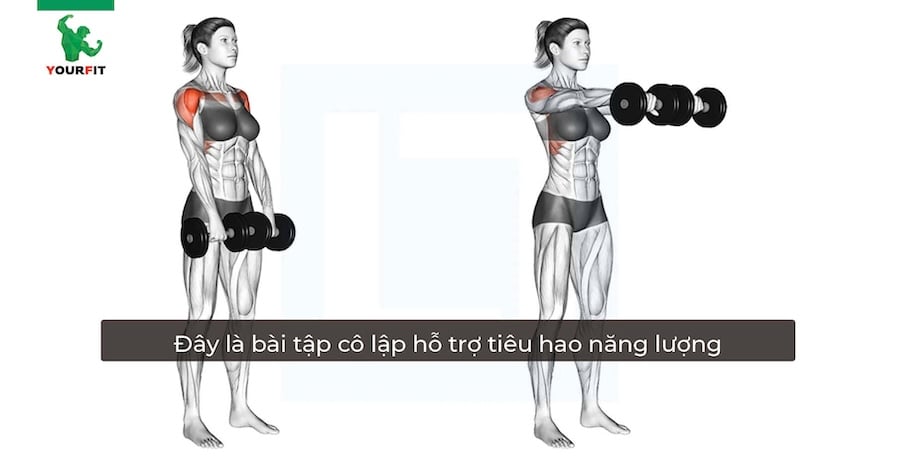
The exercise gives the anterior deltoids direct practice against resistance. Progressing it appropriately can contribute to shoulder strength and muscle development, alongside other exercises. The front shoulders also participate in pressing and everyday tasks that involve lifting the arms.
3.2. Better awareness of upper-body position
Keeping the ribs, pelvis and head aligned while moving the arms encourages body awareness. That can be useful for someone who tends to lean back or shrug when lifting. Front raises are not a treatment for neck pain or a guaranteed correction for rounded shoulders; posture and discomfort have several possible influences.
3.3. Controlled shoulder movement
A light, deliberate raise lets you practise moving the arm while keeping the trunk steady. The supporting shoulder muscles contribute to that control. This should not be confused with a promise to prevent injury or a replacement for rehabilitation after a shoulder problem.
3.4. A more deliberate shoulder programme
Front raises allow you to add direct work where it is actually needed. They do not, by themselves, balance the front, side and back of the shoulders. Review how much pressing, rowing and other shoulder work you already do before adding more sets.
3.5. Shoulder muscle development
For people interested in physique, consistent resistance training can help develop shoulder musculature. Changes depend on the programme, recovery, nutrition and individual starting point. A front raise is one possible tool, not a requirement for everyone.
3.6. Flexible equipment and setup
You can perform the movement standing or seated, with two dumbbells or one arm at a time. Bands offer another option at home. Begin with a weight that feels modest and allows stable, repeatable repetitions; fixed kilogram ranges do not suit every beginner or experienced lifter.
3.7. Supporting broader training goals
Shoulder strength can contribute to a general strength programme for sport and daily activity. Transfer to swimming, volleyball, boxing or other sports also depends on the sport itself and the rest of the training plan. More front raises alone do not guarantee better performance.
4. How to do a dumbbell front raise
4.1. Prepare your equipment and position
Use a clear, level area and a pair of dumbbells you can lift without swaying. Warm up with comfortable shoulder and arm movements, then rehearse the exercise with a light load. The preparation should leave you ready to train rather than already tired.
4.2. Perform the repetition
- Start tall: stand with the feet around hip- to shoulder-width apart, knees relaxed and head aligned with the spine.
- Hold the weights: place the dumbbells in front of the thighs, palms facing toward you. Keep a small, comfortable bend in the elbows and the wrists straight.
- Steady the trunk: gently brace your abdomen without pushing the ribs up or arching the lower back.
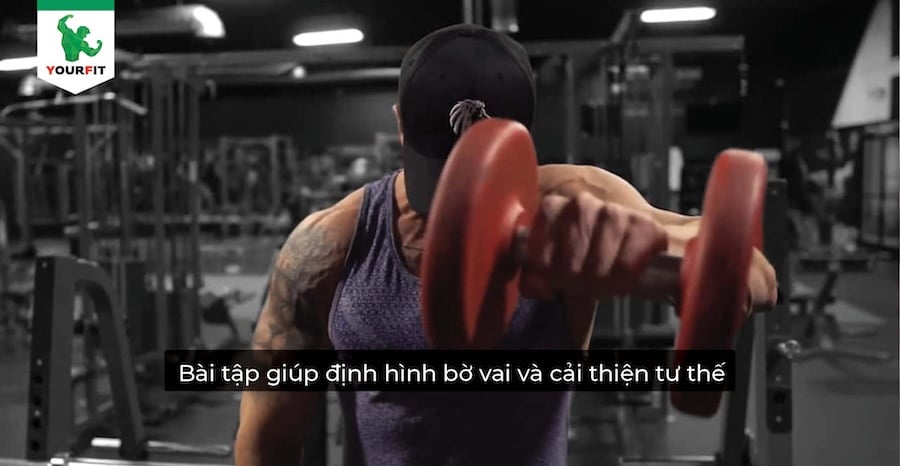
- Raise: exhale as you lift the weights forward in a controlled arc. Bring the arms to approximately shoulder height, or a lower comfortable range if required. Keep the neck relaxed and avoid deliberately shrugging to lift farther.
- Lower: inhale as you return the weights slowly to the starting position. Keep control until the repetition is finished.
A short pause near shoulder height can help prevent rushing, but it is optional. You do not need to force a particular elbow angle or hold your breath to make the movement effective.
An example accessory prescription is 3–4 sets of 12–15 repetitions with a light load. Some programmes use 8–12 repetitions with more resistance. These are options, not starting requirements: beginners may need fewer sets, and people already doing substantial pressing may need no additional front raises. Rest enough to maintain technique rather than force a short interval.
4.3. Variations

- Seated front raise: sit upright on a bench and raise the weights without using a leg drive. Keep the trunk stable rather than leaning back.
- Single-arm front raise: train one side at a time and notice any difference in control. Do not twist to help the working arm.
- Alternating front raise: alternate arms while keeping the shoulders and pelvis level. This changes how the work is distributed; it is not automatically harder or better.
- Band front raise: secure the band safely under your feet or at an appropriate anchor and follow a controlled forward path. Check the band before use.
- Bench-supported front raise: supporting the torso on an incline bench changes the starting position and available range. Use a light load and ask a coach to check the setup.
- Grip variation: a more neutral grip may feel more comfortable for some shoulders. Avoid forcing the wrists through a twisting motion while lifting.
- Tempo variation: a slower lowering phase or brief pause changes the challenge without needing a larger weight. Faster repetitions should still be controlled; swinging is not a progression.
5. Mistakes to avoid

Using momentum: if you need to rock the hips, throw the weights up or lean back, reduce the resistance. Keep the movement at the shoulders while the trunk remains steady.
Chasing height: shoulder level is a useful endpoint for the standard exercise. Raising higher is a different demand, not evidence of a better repetition. Work within a comfortable range and avoid forcing a painful position.
Overloading the exercise: a light isolation exercise can still feel challenging. Choose the weight by how well you can perform the intended repetitions, not by another person's dumbbells.
Ignoring breathing and recovery: breathe regularly and allow adequate recovery across shoulder sessions. Your front deltoids also work during pressing, so count that workload when planning the week.
Continuing through pain: stop if you experience shoulder, neck or lower-back pain. Review the setup and seek appropriate professional advice for persistent symptoms or a previous injury.
6. Choose the exercise for a reason
Dumbbell front raises work best when they fill a clear role in your programme. Use controlled repetitions, a suitable range and a manageable load, then judge progress by your technique and capacity over time. For help deciding which shoulder exercises belong in your plan, explore YourFit's strength and technique programme.