Dumbbell Pullover: Benefits, Technique and Variations
Learn how to perform the dumbbell pullover, explore useful variations, and understand its chest, back and core benefits with practical safety tips.
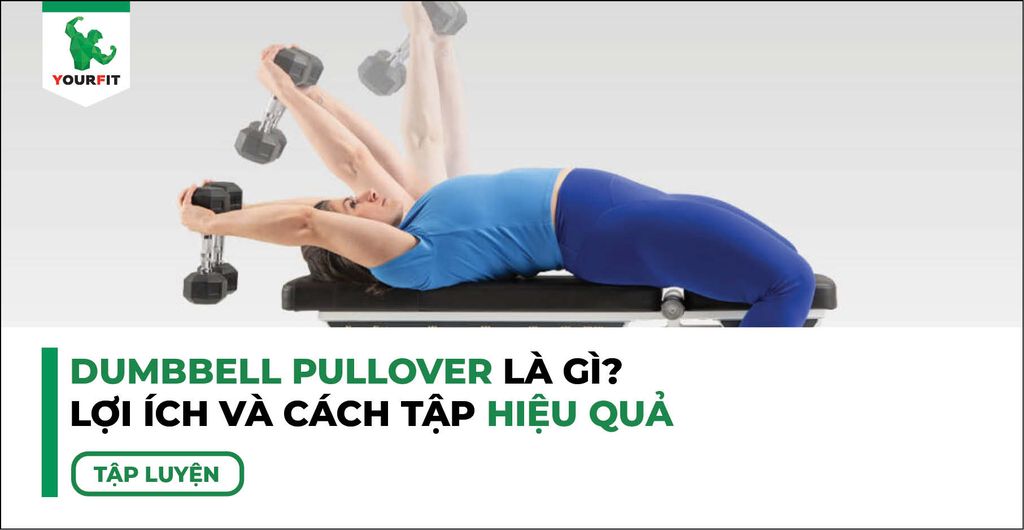
The dumbbell pullover brings the chest and back into one upper-body movement. With a suitable weight and controlled technique, it can complement a strength programme and help you develop coordination through an overhead range of motion.
This guide explains what the exercise does, how to perform it, its variations, estimated energy expenditure, benefits and important precautions.
1. What is a dumbbell pullover?
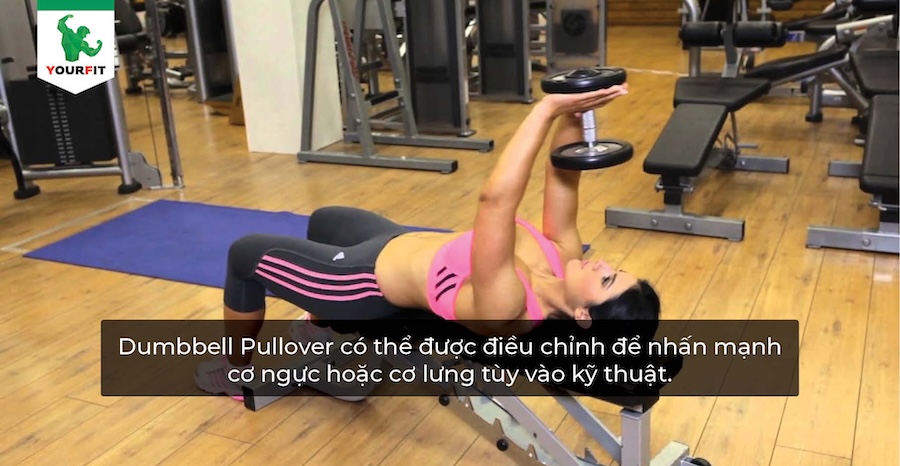
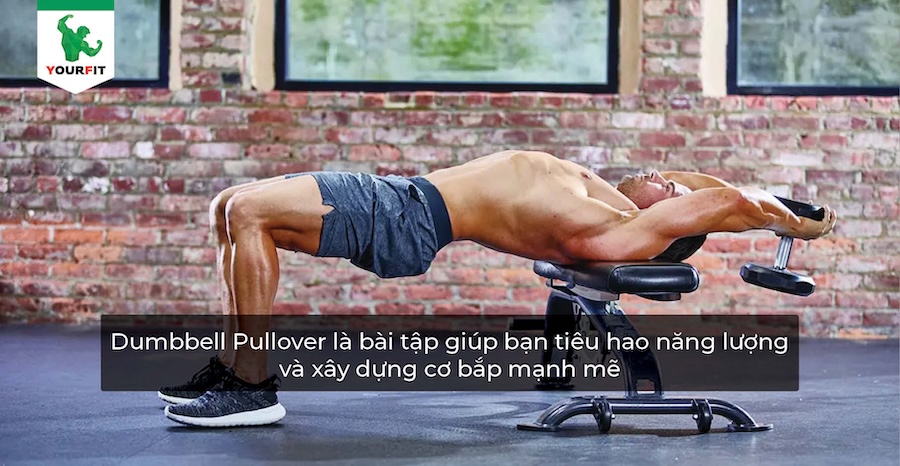
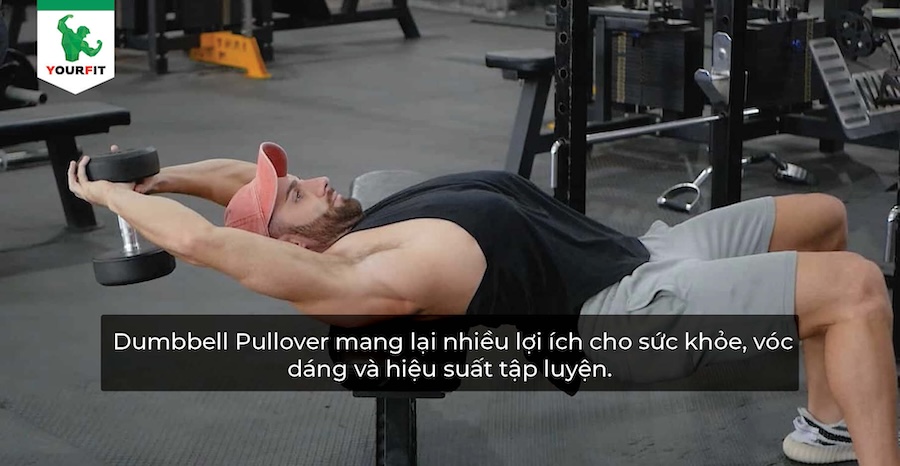
A dumbbell pullover involves lying on a bench, holding one dumbbell with both hands above your chest, lowering it behind your head in an arc, and returning it to the starting position. It can be performed on a flat, incline or decline bench.
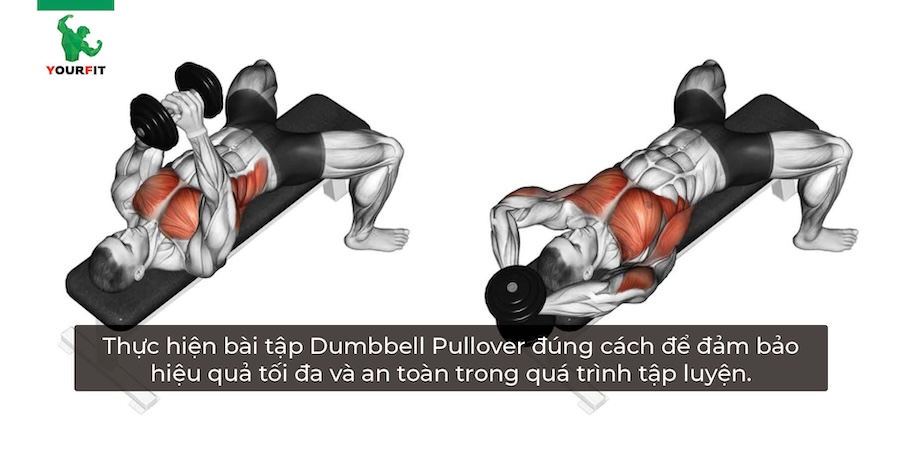
The main muscles involved are the chest and latissimus dorsi. The triceps help maintain the position of your arms, the shoulders and serratus anterior help control the shoulder blades, and your core keeps your body stable. Changes in arm position and technique can alter how the movement feels across the chest and back.
The exercise can complement training for a fuller chest and a stronger, broader back. Its overhead movement also makes it relevant to swimming, volleyball and basketball, as well as everyday pushing, pulling and lifting tasks. Progress comes from consistent practice and an appropriate overall programme.
2. Correct technique and variations
2.1. Prepare your equipment and warm up
- Equipment: Use a secure dumbbell and a stable bench. Example loads range from 5–10 kg for some beginners to 15–20 kg for experienced lifters, but these are not universal starting weights. Choose a load you can control comfortably.
- Space: Leave enough room to move the dumbbell behind your head. Use a non-slip surface where needed.
- Warm-up: Spend 5–10 minutes on shoulder circles, arm circles, cat–cow stretches and light presses to prepare the chest, back, shoulders and core.
2.2. How to perform the basic pullover
- Lie on a flat bench with your head supported, knees bent and feet firmly planted. Hold the inside of one end of the dumbbell securely with both hands, palms forming a triangle.
- Position the dumbbell above your chest. Keep a small, steady bend in your elbows—approximately 10–15 degrees—and brace your core without excessively arching your lower back.
- Inhale as you lower the weight slowly behind your head in an arc. Keep your arms aligned and your elbow angle consistent.
- Stop when you feel a comfortable stretch through your chest and back. Around ear level may be enough; the right depth depends on your shoulder mobility. Do not force a deeper range.
- Exhale as you bring the dumbbell back above your chest, using a controlled movement. Allow roughly 2–3 seconds to lower and 2 seconds to return.
A possible starting structure is 3–4 sets of 8–12 repetitions, or 6–10 repetitions with a heavier load for experienced lifters. Rest for 30–60 seconds or longer as needed; 15–30 seconds increases the density of a session, but use enough rest to maintain technique.
2.3. Pullover variations
- Incline dumbbell pullover: Use a bench inclined by approximately 30–45 degrees. The changed angle alters the chest emphasis and offers an alternative to the flat version.
- Decline dumbbell pullover: A decline of approximately 15–30 degrees changes the line of movement and can increase the stretch. Keep your torso supported and avoid forcing the shoulder range.
- Single-arm pullover: Hold a lighter dumbbell in one hand and use the other to steady yourself on the bench or torso. Working one side at a time can reveal differences in control and challenges the core to resist rotation.
- Stability-ball pullover: Rest your shoulders and head on a stability ball while keeping your hips supported by your legs. The core and glutes work to maintain balance. This variation requires additional stability and control.
- Dead bug pullover: Combine the arm movement with a dead bug position. Start with the legs in tabletop, then extend a leg as the weight moves overhead while maintaining controlled contact between your lower back and the floor.
Choose the version that suits your experience, goals and equipment. Learn the flat-bench movement before progressing to less stable variations.
3. How many calories does five minutes of dumbbell pullovers burn?
There is no reliable fixed calorie total for five minutes of this exercise. Energy expenditure depends on body weight, the load, the number of repetitions, movement tempo, rest intervals and how much of the session is spent working.
More sets and repetitions increase total work. Shorter rests can make a session more demanding, but rushing or using a weight you cannot control compromises technique. Training experience and movement efficiency also influence the effort involved.
Use this exercise primarily to develop strength and control. For broader fitness and weight-management goals, combine suitable resistance training with cardiovascular activity and a balanced eating pattern.
4. Potential benefits
4.1. Chest and back development
The pectoralis major and latissimus dorsi contribute to the movement. A well-planned programme can use the pullover to complement chest and back work and support balanced upper-body development.
4.2. Shoulder movement
A controlled overhead arc provides practice through a comfortable shoulder range. This can support movement confidence in overhead sports, but a larger range is not automatically better.
4.3. Core stability
Your abdominal and trunk muscles work to keep your torso steady. Stability-ball and dead bug versions place additional demands on this control.
4.4. Support for pushing and pulling exercises
Chest and back strength can complement bench presses, pull-ups and broader strength training, including deadlifts. The benefit depends on your programme and technique.
4.5. An adjustable exercise option
Pullovers offer a different shoulder loading pattern from overhead presses. They are not automatically safer for a painful or injured shoulder; appropriate weight, range and professional guidance matter.
4.6. Posture and upper-body awareness
Strengthening the upper body and improving movement control can be part of addressing the effects of prolonged sitting. A pullover alone should not be expected to correct posture or relieve neck and shoulder pain.
5. Important precautions
5.1. Put technique first
Lower and lift smoothly. Avoid momentum, dropping the dumbbell quickly or forcing it far behind your head. These habits can place unnecessary stress on the shoulder.
5.2. Choose a manageable load
Start conservatively and increase weight only when you can maintain control. Reduce it if your elbows move unpredictably or your back begins to arch.
5.3. Maintain a small elbow bend
Keep roughly 10–15 degrees of elbow flexion throughout, as though holding a large round object. Do not turn the exercise into a triceps extension.
5.4. Avoid common mistakes
- Lowering too far: Stop at a comfortable stretch rather than chasing depth.
- Excessive back arching: Brace the abdomen and glutes and keep your torso supported.
- Losing the intended movement: If the shoulders or arms dominate or become uncomfortable, review your form and reduce the load.
- Moving the head and neck: Keep your head supported and neck neutral rather than lifting it to watch the dumbbell.
- Moving too quickly: Aim for controlled phases of approximately 2–3 seconds.
5.5. Allow recovery
Avoid training the same muscles hard every day. Allow around 48–72 hours between demanding sessions for the same muscles, with chest/back sessions 2–3 times a week if appropriate, alternating with rest or other muscle groups. Adjust this to your overall workload, and support recovery with adequate sleep and nutrition.
6. Putting it into practice
The dumbbell pullover can be a useful addition to chest and back training when its load and range suit you. Start with the basic version, practise a steady movement, and progress gradually. Share your experience or questions with YourFit if you would like help fitting it into your programme.