Dumbbell Chest Fly: Benefits, Form and Training Tips
Learn dumbbell chest fly technique, sets and repetitions, potential benefits, calorie estimates and practical tips for safe chest training.
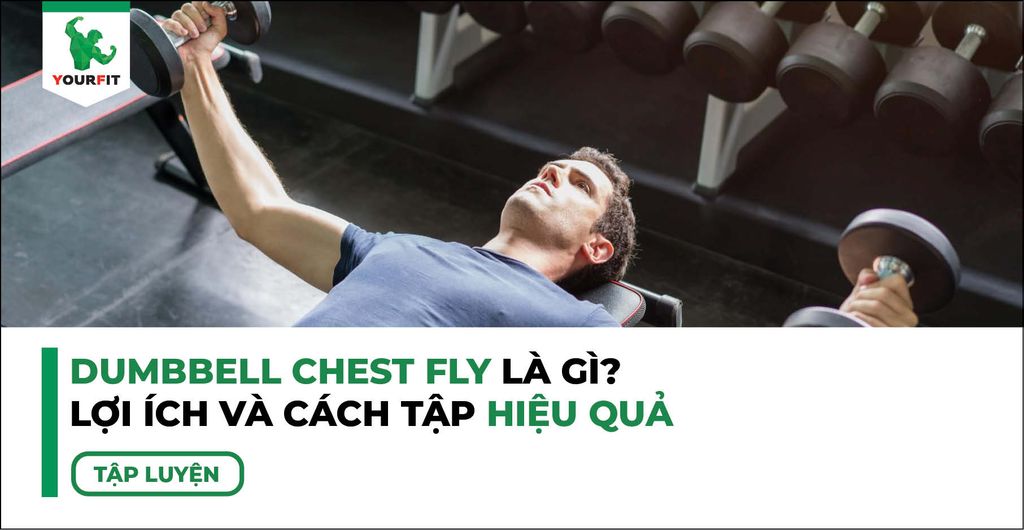
The dumbbell chest fly is an isolation exercise that trains the chest by opening and bringing the arms together. It adds a different movement to pressing exercises and can support chest strength, muscle development and control.
This guide covers the movement, correct technique, benefits, estimated energy use and practical precautions for beginners and experienced lifters.
1. What is a dumbbell chest fly?
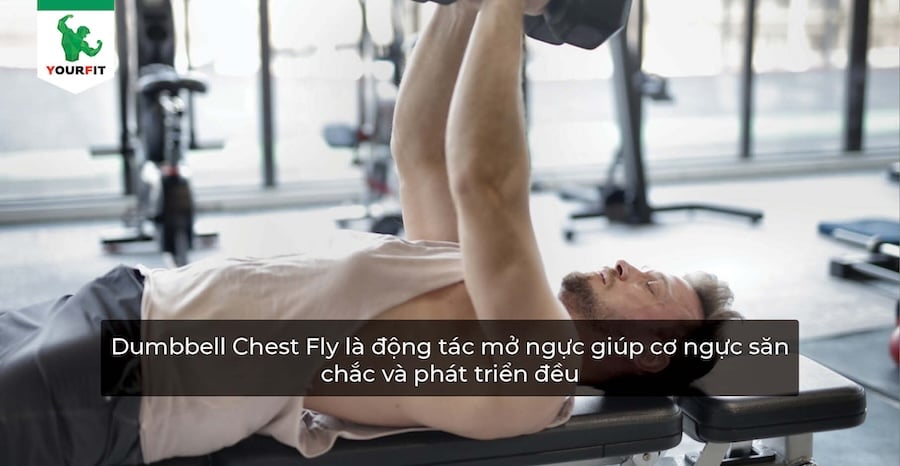
In a dumbbell fly, you lie on a bench with a dumbbell in each hand, open your arms in a wide arc and bring them back above your chest. The name comes from the wing-like opening and closing motion.
Unlike a compound exercise such as the bench press, the fly concentrates on movement at the shoulder with relatively little change in elbow angle. The pectoral muscles do most of the work, while the front shoulders, biceps and muscles around the shoulder blades help stabilise the arms. Your core keeps your torso steady.
Fly variations can complement pressing movements, help you notice differences between sides and provide a controlled stretch under load. Chest and shoulder movement also matters in everyday activities such as pushing doors and lifting objects, and in sports including swimming and volleyball.
A flat, incline or decline bench changes the angle of the exercise. Possible loads vary widely, from 2–5 kg for some beginners to 10–20 kg for experienced lifters; these are not prescribed starting weights. Choose a load that matches your control and shoulder comfort.
2. How to perform a dumbbell chest fly
2.1. Get ready
- Prepare a matched pair of dumbbells and a stable flat, incline or decline bench.
- Leave enough room to open your arms without hitting equipment or other people. Ensure the floor is not slippery.
- Warm up for 5–10 minutes with shoulder circles, arm circles, gentle chest-opening movements and easy push-ups.
2.2. Step-by-step technique
- Lie on the bench with your feet firmly on the floor and knees bent. Hold one dumbbell in each hand with palms facing each other.
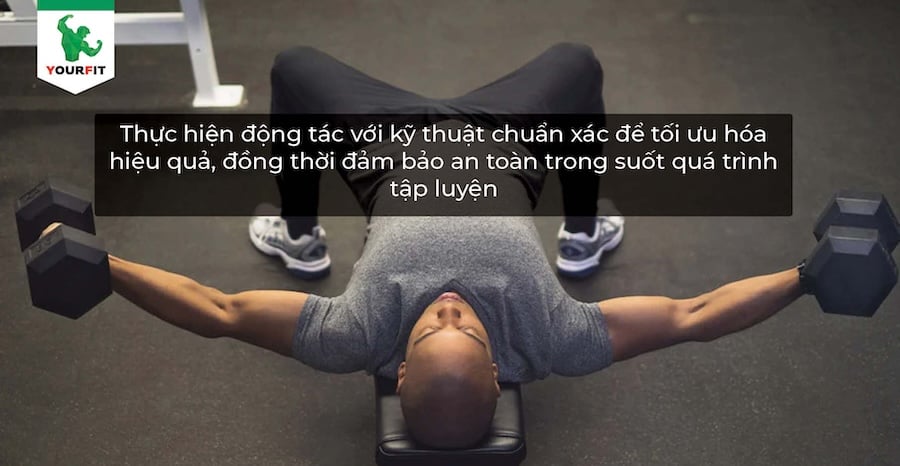
- Position the weights above your chest. Keep a small elbow bend of approximately 10–15 degrees, brace your core and avoid excessive lower-back arching.
- Inhale as you open your arms slowly to the sides, as though opening an embrace around a large ball.
- Stop when your chest feels a comfortable stretch, usually around shoulder level. Do not force the weights lower than your shoulders can comfortably control.
- Exhale as you bring your arms back together. Keep tension through the chest and avoid knocking the weights together.
- Use a smooth tempo: roughly 2–3 seconds to lower and 2 seconds to lift.
Try 3–4 sets of 10–15 repetitions, or 8–12 repetitions with a heavier load if you are experienced. Rest 30–60 seconds or longer between sets as needed. Shorter rests of 15–30 seconds increase session density, but only use them when you can preserve technique.
3. Potential benefits
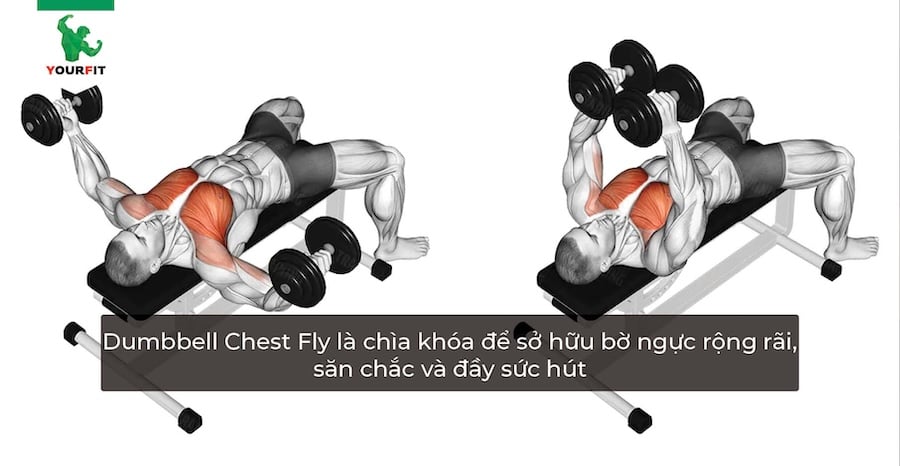
3.1. Chest development
Fly movements load the chest through a wide arc. Bench angle changes the emphasis, allowing flat, incline and decline variations to contribute to an upper-body programme.
3.2. Movement through a comfortable stretch
The opening phase trains control as the chest lengthens. Practising an appropriate range can complement the mobility needed for lifting, pushing, swimming and volleyball.
3.3. A complement to pressing
The fly provides a different chest stimulus from bench presses and push-ups. Using both movement patterns can make a programme more varied, while unilateral work may help identify differences between sides.
3.4. Adjustable shoulder loading
Fly exercises usually use lighter weights than presses, but that does not automatically mean less shoulder stress. People with shoulder symptoms should choose a suitable range and load with professional guidance.
3.5. Posture and movement awareness
Strength training and comfortable shoulder movement can be part of a broader approach to the effects of prolonged sitting. Chest flies alone are not a treatment for rounded shoulders or neck pain.
3.6. Adaptability
Different bench angles and loads make the movement adaptable. A light version can also be practised at home with suitable, securely held equipment, including small filled water bottles when appropriate.
3.7. Use in supervised rehabilitation
A clinician may include a light, modified fly in an individual rehabilitation programme. This does not make it suitable for every shoulder injury, and it should not be used to self-treat pain.
3.8. Movement control
Controlling separate dumbbells challenges coordination between the chest, shoulders and arms. This is relevant to precise upper-body movements in tennis, volleyball and swimming.
4. Estimated calories burned in five minutes
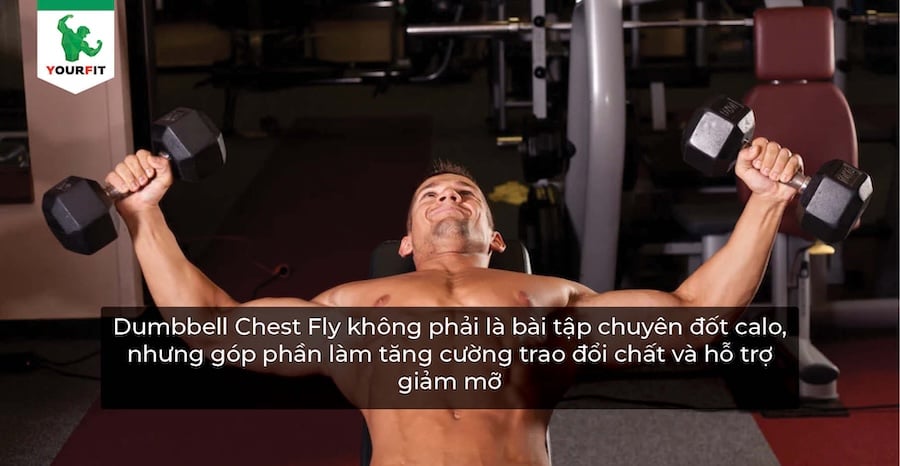
There is no reliable fixed calorie total for five minutes of this exercise. Energy expenditure depends on body weight, the load, the number of repetitions, movement tempo, rest intervals and how much of the session is spent working.
More sets and repetitions increase total work. Shorter rests can make a session more demanding, but rushing or using a weight you cannot control compromises technique. Training experience and movement efficiency also influence the effort involved.
Use this exercise primarily to develop strength and control. For broader fitness and weight-management goals, combine suitable resistance training with cardiovascular activity and a balanced eating pattern.
5. Important training precautions

- Prioritise technique: Avoid momentum and an excessively deep stretch. Open and close your arms slowly.
- Use a manageable weight: Begin lightly and increase only after you can control every repetition.
- Keep the elbows softly bent: Maintain approximately 10–15 degrees of flexion instead of locking the arms rigidly straight.
- Breathe steadily: Inhale as the arms open and exhale as they close.
- Avoid excessive back arching: Keep your torso supported and core engaged.
- Keep the movement consistent: Do not turn the fly into a press or swing the dumbbells with your arms.
- Do not clash the weights: Finish under control above the chest.
- Recover between sessions: Allow around 48–72 hours for the chest to recover between demanding workouts. Adjust this to your total training load.
Stop if you experience shoulder, elbow or chest pain. Review your technique with a qualified coach or physiotherapist. If you have a previous shoulder injury, seek appropriate clinical advice before adding the exercise.
5.1. Tips for beginners
- Start with light dumbbells; 2–5 kg may be manageable for some people, while others should start lighter.
- Try 3 sets of 10–15 controlled repetitions with 45–60 seconds of rest.
- Learn on a flat bench or with a floor variation before progressing to incline versions.
- Combine flies with other suitable chest movements, such as push-ups or bench presses.
5.2. Tips for experienced lifters
- Progress the load or repetitions gradually; 8–15 kg and 8–12 repetitions are examples for lifters who can maintain control at those loads.
- Try incline or single-arm flies when you can maintain stability.
- One circuit option is 12 fly repetitions followed by 30 seconds of push-ups or dips. Select exercises and rest to match your ability.
- Use resistance bands or a different bench angle to vary the training stimulus.
6. Putting it into practice
A dumbbell chest fly can complement a chest programme when performed with a comfortable range and a manageable load. Learn the movement, progress patiently and allow recovery. Share your questions or experience with YourFit for support with your training.